
Alluding Boyz in the Hood it its very title, I wonder if Tales from the Hood began as a parody that evolved into a greater project. Likewise, I pivoted my writing on film because its last story, “Hard-Core Convert,” required more attention than I had anticipated.
Among the stories in Tales from the Hood, “Hard-Core Convert” is the most flawed because it tries to take itself the most seriously. Most problematic is how it fumbles around with the “black on black crime” red herring. Juxtaposing imagery of Black gang violence with imagery of violence the Ku Klux Klan has inflicted upon Black people as if they are analogous derails its own messaging. We now recognize “black on black crime” as a racist dog whistle; I have already addressed this in my linked writing about Boyz in the Hood.
“Hard-Core Convert” is an allegory for not only how every person will have to stand before God in judgement for their sins (Romans 14:10-12), but also and more importantly, how God is patient with us and gives us plenty of time and opportunity to come to repentance, not wanting anyone to perish (2 Peter 3:9). Channeling A Clockwork Orange’s reprogramming scene, Crazy K experiences the sensory deprivation chamber. During this scene, Crazy K confronts the souls of his victims, who demand explication for the violence he inflicted upon them. This is the moment that God has provided Crazy K to reflect and show remorse. To deploy the theological term, repentance is what’s required. But Crazy K hardens his heart, doubling down on rage and resentment, displacing the blame for his actions. His refusal to acknowledge his part in the cycle of violence manifests itself as his body leaks on the streets, and the three thugs in the frame story, “Welcome to My Mortuary,” consequently finish him.
The twist in “Hard-Core Convert,” however, is that Crazy K—not a Kappa as Eskia notes in this video despite the “K” shaven into his skull—is offered opportunities to repent for perpetuating the cycle of violence. Instead, he choses death.
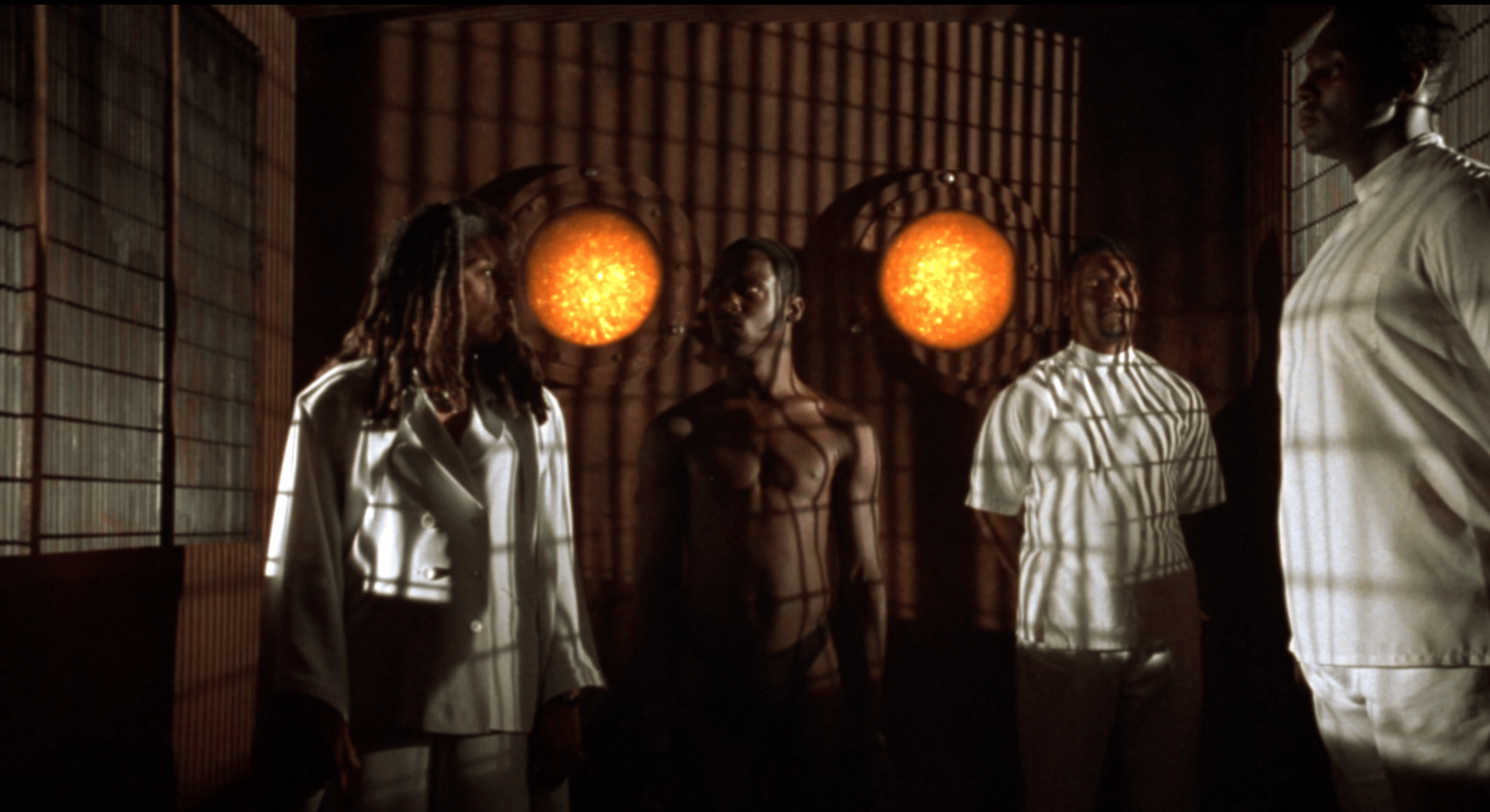
Likewise, so do the three thugs from the frame story. They are so focused on finding the alleged drugs that they do not reflect on Mr. Simms’s parables, especially the last one, as they are the very suspects who murder Crazy K. Mr. Simms regaling their exploits in explicit detail should have been as much of a clue as Dr. Cushing begging Crazy K to admit his guilt as the souls of his victims manifest and plead with him.
As with these two stories, I believe that God will present everyone with a choice that they have to make.
“For if we go on sinning deliberately after receiving the knowledge of the truth, there no longer remains a sacrifice for sins, but a fearful expectation of judgment, and a fury of fire that will consume the adversaries.” Hebrews 10: 26
“For the wages of sin is death, but the free gift of God is eternal life in Christ Jesus our Lord.” Romans 6:23
Digression warning: It’s funny to me that in 2025, some American Evangelicals actually claimed that the rapture was coming this year, an event derived from bad exegesis and theology that is so inaccurate, “rapture” does not even appear in scripture.
Speculation of world-ending events shouldn’t influence how we walk the path of the Lord. No one, not even Jesus according to Christ himself, knows when he will return (Matthew 24:26). To make a declaration to the contrary is apostasy, let alone damaging to the reputation of the Gospel as credible. It’s not like American Evangelicals are committed to loving their neighbors as themselves anyway, given how uncontested ICE has been running rampant, but pining for a “rapture” requires intemperate selfishness. I don’t think anyone who has read the Book of Revelation longs to remain on Earth when the trumpets sound and all the calamities come. Yet to think that one will ascend to heaven while abandoning the “unworthy,” or whatever Left Behind literature imagines, exudes the self-righteousness that Jesus warns against in the parable of the Pharisee and the tax collector (Luke 18:9-14). The urgency to abandon the earth is giving white flight.
2 Peter 3:9 beautifully subverts the impatience God’s children may have with Him concerning the timing in which He delivers on His promises with instead, how patient God is with us. “Hard-Core Convert” nearly neutralizes this messaging when Crazy K encounters the white supremacist who claims that they are the same because they both kill a lot of Black people. I prefer not to devote many lines to this logically fallacious derailment. I’ll simply say here that proximity is the defining factor for victims of crime, and Black people living in close proximity historically stems from institutional racism. I attribute Tales from the Hood‘s narrative blunders to 90’s era rhetoric where sociological revelations had yet to catch up to the anecdotes.
My disgust of 45/47 has impacted my writing. I was considering composing a sentence, “Everybody/everyone knows about the ‘Black person dies first’ trope in movies,” but I remembered that 45/47 talks like that.
I hate how they’ve robbed us of these things.