
After graduating from high school, getting married, and graduating from college, I matriculated to Michigan State University to enter an accelerated Ph.D program in English, all in the 2000s. During this transition, my wife bolstered my interest in tennis beyond which Williams sister is the prettiest. Growing frustrated with the paltry WTA coverage outside of Anna K, I lurked around ESPN Page 2 and found Jemele Hill, who established herself in her first column for ESPN at 30 years old, “’I’m Hearing Voices.”
She’s had me hooked to her body of work ever since.
Check out that link. It’s a great read from the perspective of a Black woman who landed what most sports fans would consider a dream job. Right out of the gate, she highlights several topics that I was also thinking about in 2007: Detroit isn’t the war zone that white people outside of southeast Michigan believe; Kobe > LeBron; and Don Cheadle is an underrated actor. I might even scrape Wayback Machine for more of Jemele’s stuff since ESPN canned Page 2 over a decade ago.
Yes, I just call her Jemele. First-name basis. She’s one of us.
As the only Black male in my program, reading Jemele on ESPN Page 2 was the closest I could get to participating in community with Black folks. My wife and I tried a couple of Black churches after moving to MI, yet they struck us as more performative than substantive, and we ended up at an integrated Church that would soon thereafter vote in a Black pastor. I’ve written a little about this before. While we are grateful for the connections and resources at Trinity Church, an integrated merely means it’s not explicitly hostile toward (respectable!) Black people so that they feel safe attending.
In the early chapters of Uphill, Jemele likewise establishes faith as a cornerstone in her life, beginning with a near-fatal car accident and cemented during an encounter with a friend’s father when she was at a sleepover. She says that God saved her in both instances, neither knowing how she survived the car accident nor how she escaped her would-be sexual assailant. She also maintains calls for churches to minister more inclusively.
Jemele describes her discovery of writing and journaling as cathartic for the trauma in her life—that is, her mother’s as a rape survivor with a painkiller addiction that transitioned into heroin. As a child, Jemele loathed her mother’s frequent liaisons with various men in exchange for housing, food, money, or drugs, but understands the struggle as an adult woman. However, two of those men are worth noting. Jemele derived her love for sports from James, her stepfather. She was at first angry at him because he and her mother didn’t work out, but the reason for this is that he came out as a queer man who would later contract and succumb to HIV/AIDS. One of her mother’s sugar daddies, Mr. Miller, subscribed to the Detroit Free Press and the Detroit News, enkindling Jemele’s passion for journalism. These elements, combined with inheriting her argumentative nature from her grandmother and uncle debating each other about everything, forged the Jemele Hill that I adored watching on ESPN.
Not that the other details of Jemele’s early life are uninteresting, but I became most engaged from chapter 6 of Uphill, which details her experience matriculating to MSU—hence my intro. She started writing for The State News as a freshman despite its notorious barrier of entry. But two editors during her interview were Black: Editor-in-Chief Suzette Hackney and Sports Editor Edward James. Suzette was the first Black EiC in the paper’s history and took on Jemelle as a personal project. Jemele immediately polarizes readers, writing opinions such as Black people look foolish cheering for OJ for being acquitted even though he really ain’t one of us (fair). Some readers challenged her provocative directly; a student at a Black student rally called her an Aunt Jemima; after writing that reverse racism doesn’t exist, a white person called her the N-word for the first time in her professional career. Death threats would follow, but they did not deter her. Jemele finishes her semester at The State News, and doesn’t write another column for TEN YEARS!
After some internships with the Detroit Free Press and The Philadelphia Inquirer, Jemele accepted the offer to work for the Free Press for $48k/year, which is the most money anyone in her family has ever made. The Orlando Sentinel would be her penultimate stop before ESPN in 2006.
Neal [Shine] started at the Free Press as a copy boy in 1950 and became publisher of the paper forty years later…He was incredibly approachable and you could walk into his office any time—as I often did. Sometimes I wouldn’t leave for hours, absorbing all of his stories, and learning how critical journalism was to a functioning democracy and the significant responsibility placed on journalists’ shoulders. I wanted to be a journalist that Neal could admire. He really believed it was a journalist’s job to be the watchdog of society, and that our loyalty should be to great journalism and not the bottom line (Hill, 101-102).
Jemele thrusts me back into a paroxysm of nostalgia as she chronicles her ESPN career, evoking ESPN’s zeitgeist. What is now known as First Take began on show called Cold Pizza hosted by Jay Crawford, Kit Hoover, and Dana Jacobson, when Woody Paige was still destroying debating Skip Bayless during a segment called “First and Ten.” When Jemele mentions the late John Saunders and The Sports Reporters, I recall being late to church trying to watch its last segment on Sundays when each journalist takes a turn to deliver a final word about the sports story of their choosing. Jim Rome Is Burning; Around the Horn; Pardon the Interruption; Outside the Lines; for at least a decade starting around 2006, it was possible to turn our TVs on to ESPN or ESPN2 around noon and stay entertained with quality content and personalities until actual sports kicked off at dusk.
“Keith [Clinkscales] understood that because the major sports were dominated by Black athletes, Black culture was organically infused in sports. Therefore it was ESPN’s responsibility to cover and amplify Black voices and culture. He naturally saw the intersection of sports with race, gender, politics, and social issues. Keith told me he was looking to add talented Black folks who knew how to intelligently cover and discuss these cultural intersections and add a Black perspective to daily sports coverage (Hill, 129).
That’s because ESPN pivoted heavily into Black culture thanks first to Stuart Scott, then others like Michael Smith and, of course, Jemele. Barack Obama’s election in 2008 signaled a cultural milieu, and with it, ESPN broadcasted some of the best and most memorable shows and television moments. Reading Uphill, one can discern who the cool people are and who aren’t based upon Jemele’s anecdotes. Consider, for example, how prominent Stephen A. Smith and Skip Bayless have been in the past five years, yet she references them only once each. Most Black sports fans know about Sage Steele’s fall from grace, but Jemele doesn’t drag her. In fact, she talks about how Steele once saved her from a bad makeup job due to a lack of Black stylists, a common problem in the entertainment industry. Contrastingly, Jemele affirms how Cari Champion has been in her corner throughout her ESPN tenure, and they remained friends even when Cari won the bid to host First Take (post ESPN, they had a show on Vice TV, Cari & Jemele (Won’t) Stick to Sports, which I will be watching after this publishes, lol).
With “Television turned me into a girl. Excuse me, a woman” (Uphill 143), Jemele describes how she changes her entire style from always wearing black on air and looking “rough around the edges” to wearing more pinks, purples, and bright colors, at the behest of her friend Erya Washington. This transformation stage heightens her awareness of the double-standard concerning expectations for men and women. She ends up beefing with Chris Berman, whom Hill mentions in an interview with Richard Deitsch for Sports Illustrated concerning misogyny that women face in sports broadcasting. “Nobody cares that Berman is balding, but women are not given the same grace as they age” (Hill, 190). Berman would leave a nastygram in Jemele’s voicemail which she hasn’t listened to till this day. They would eventually bury the hatchet along with Berman’s wife when she passes. That was a terrible pun.
Berman said he didn’t want to hear that Angela Davis shit when he heard I would be doing the voiceover for an essay.
While I don’t recall Jemele on SportsNation, I also fondly remember Michelle Beadle. Her meteoric rise was an apotheosis in the world of sports journalism: a sharp, witty, progressively minded, blonde-headed millennial woman who was attractive enough to pass as a “girl next door all grown up.” She’s also a San Antonio Spurs fan! Yet Jemele writes that ESPN chose Beadle over her to co-host SportsNation. Okay, that one hurts, but I know Jemele would never be that kind of popular on ESPN. Nevertheless, she remains special to us, whether as a progressive mind filling in for someone on The Sports Reporters or whatever imitation “First and 10” show. I always enjoy seeing her on television because she Keeps It Real at All Times, I felt the same whenever I saw Michael Smith on Around the Horn.
(Just to round out my favorite female personalities at ESPN, there’s Heather Dinich, who kept up the hype for the ACC during FSU’s twilight years.)
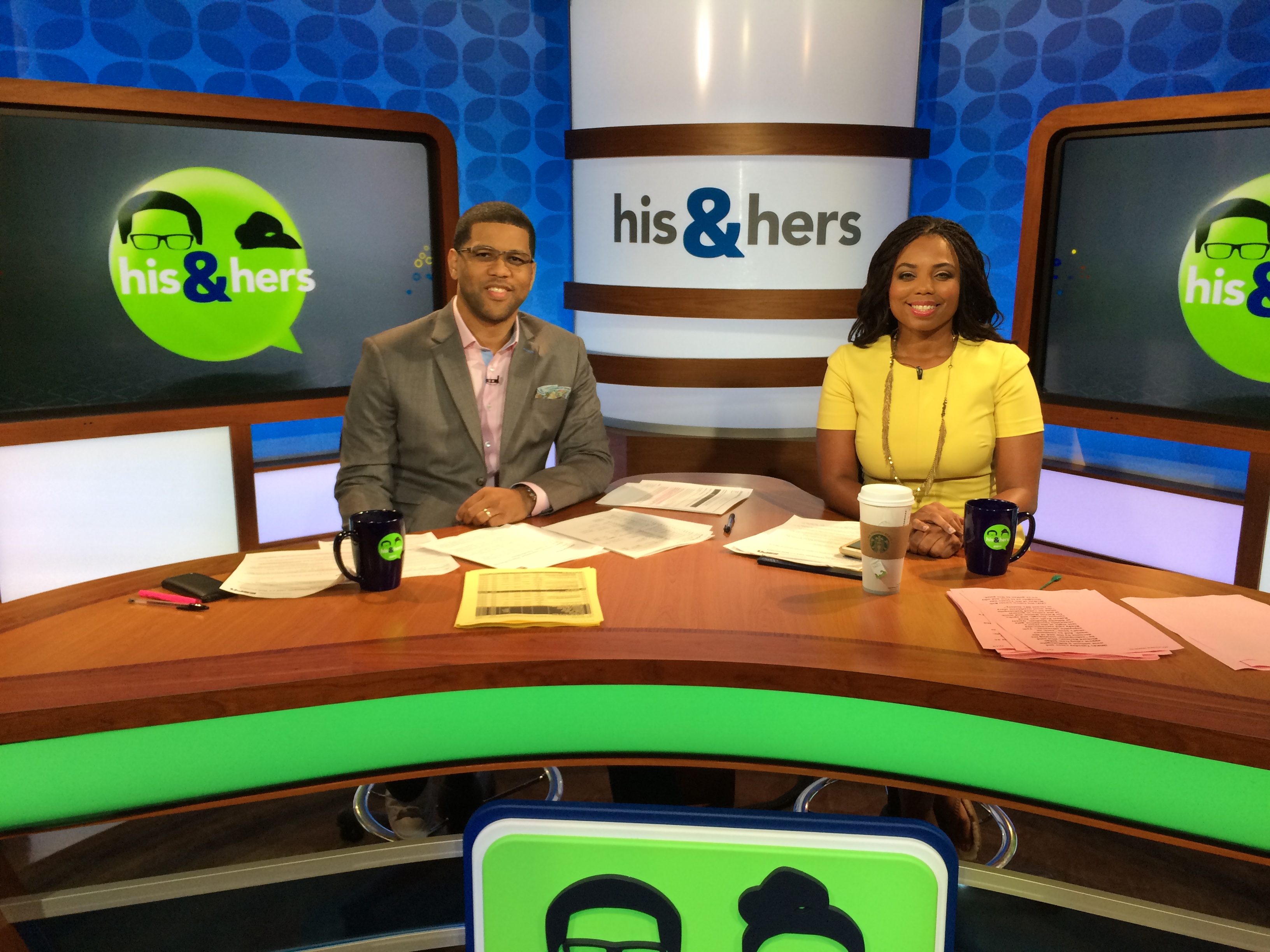
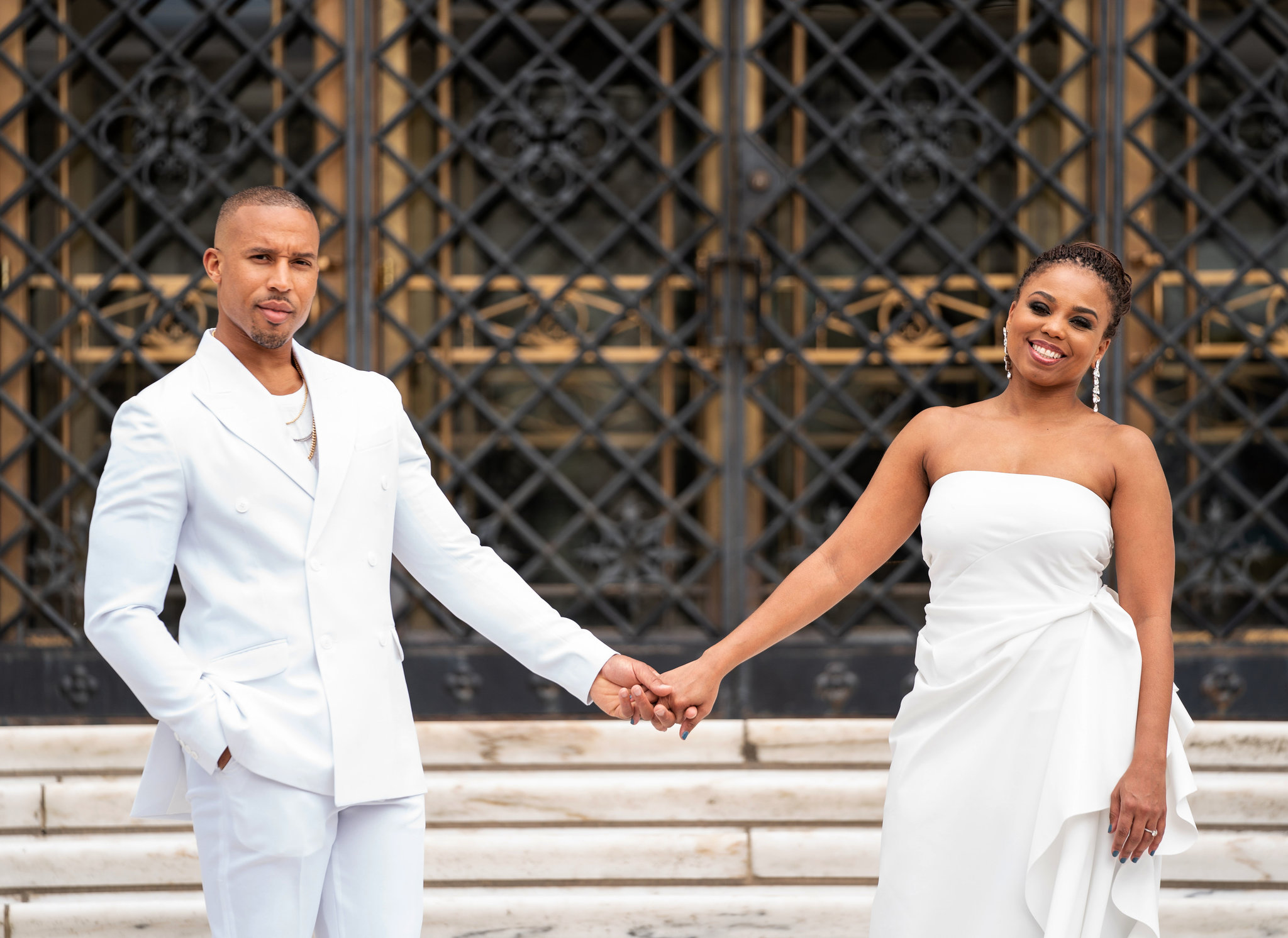
While they would abhor what I’m about to write here, seeing Michael and Jemele on The Numbers Never Lie was my geeky sports fan equivalent of what a lot of Black folks saw with AJ and Free on BET’s 106 and Park. There was a time when I “shipped” them in my mind because their very platonic chemistry congealed like cookies & cream. Uphill puts to rest all speculation, for they are both happily married. To their spouses. Who are not Jemele or Michael.
However, reading between the lines, Jemele describes calling Michael up to hang out or whatever and he’s like, nah, imma chill and play video games. She makes it clear that he wasn’t interested, but not that she was never interested.
IJS.
That said, their synchronization exuded from the television to the degree that they convinced their bosses to change the stuffy The Numbers Never Lie assignment into His & Hers, where they could write their own scripts that were ultra-Black with pop culture references, hip hop lyrics, and the like (RIP the He Said, She Said idea):
His and Hers: “[Mike and I] developed a pretty significant chip on our shoulder and it mortified us to keep busting our ass. Our show was broadcast out of one of ESPN’s older studios, which was called Studio N. Mike and I joked that the N stood for Niggas, because sometimes that’s how we felt we were being treated. We had a small staff and a nonexistent budget. We had no choice but to learn how to do more with less, but we never used it as an excuse to not produce the best show we could.
As frustrating as things could be at times, I wouldn’t have wanted our journey to be any different. I did some of the best television of my career on His & Hers. Further solidifying that all I needed to do was succeed in this business was to be myself. That had always been more than enough (Hill, 175).
Jemele and Michael were such hot commodities during the His & Hers stint that ESPN offered them the prime-time 6 PM slot to host SportsCenter. They had made it to the top. Jemele’s second ESPN contract in 2009 required only 20 TV appearances per year. She was now signing for a seven-figure signing bonus—not the salary, just the bonus! Unfortunately, as all are aware, things went downhill from there. The following disclosures are Uphill‘s main selling point.
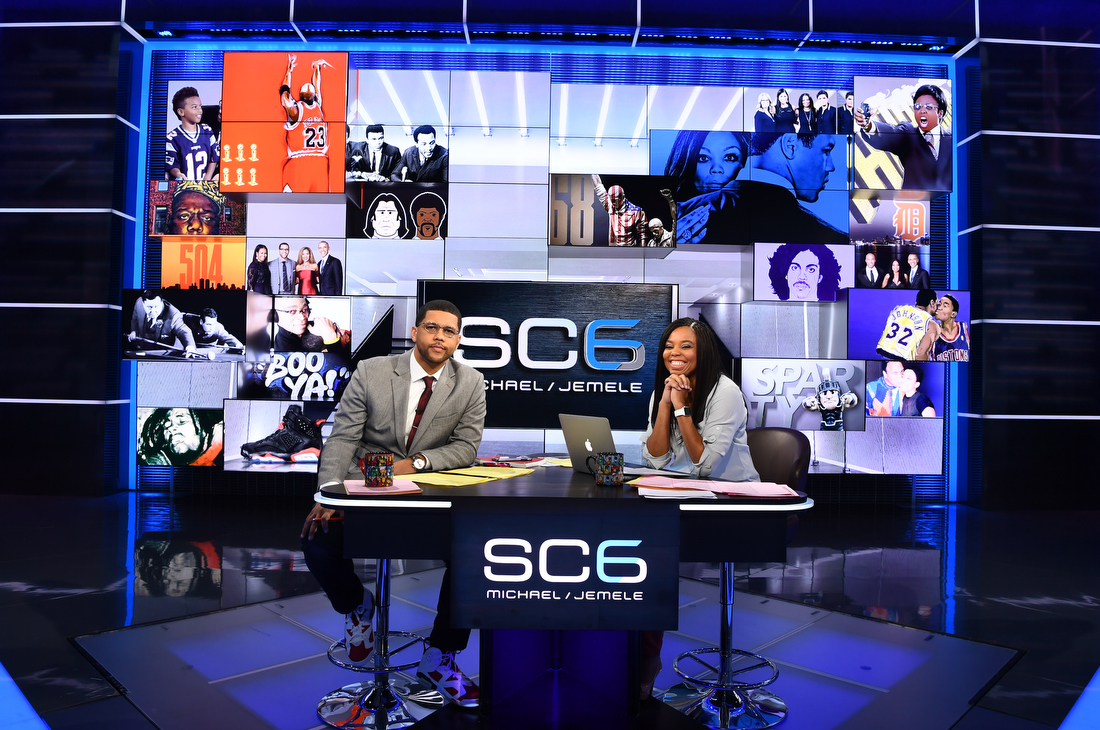
(photo by Joe Faraoni / ESPN Images)
SportsCenter’s formatting did not allow for their personalities to shine. It’s ESPN’s flagship show. Classic. Traditional. Inflexible for their style. SC6/The Six was doomed to fail because of behind-the-scenes executive override. Jemele’s departure from ESPN was less about her suspensions after she said fans should protest the Dallas Cowboys because Jerry Jones threatened his players to discourage kneeling during the national anthem, or tweeting that 45(/47) is a white supremacist, but more because ESPN stifled the creativity that popularized His & Hers, and the job deteriorated from a dream into a nightmare.
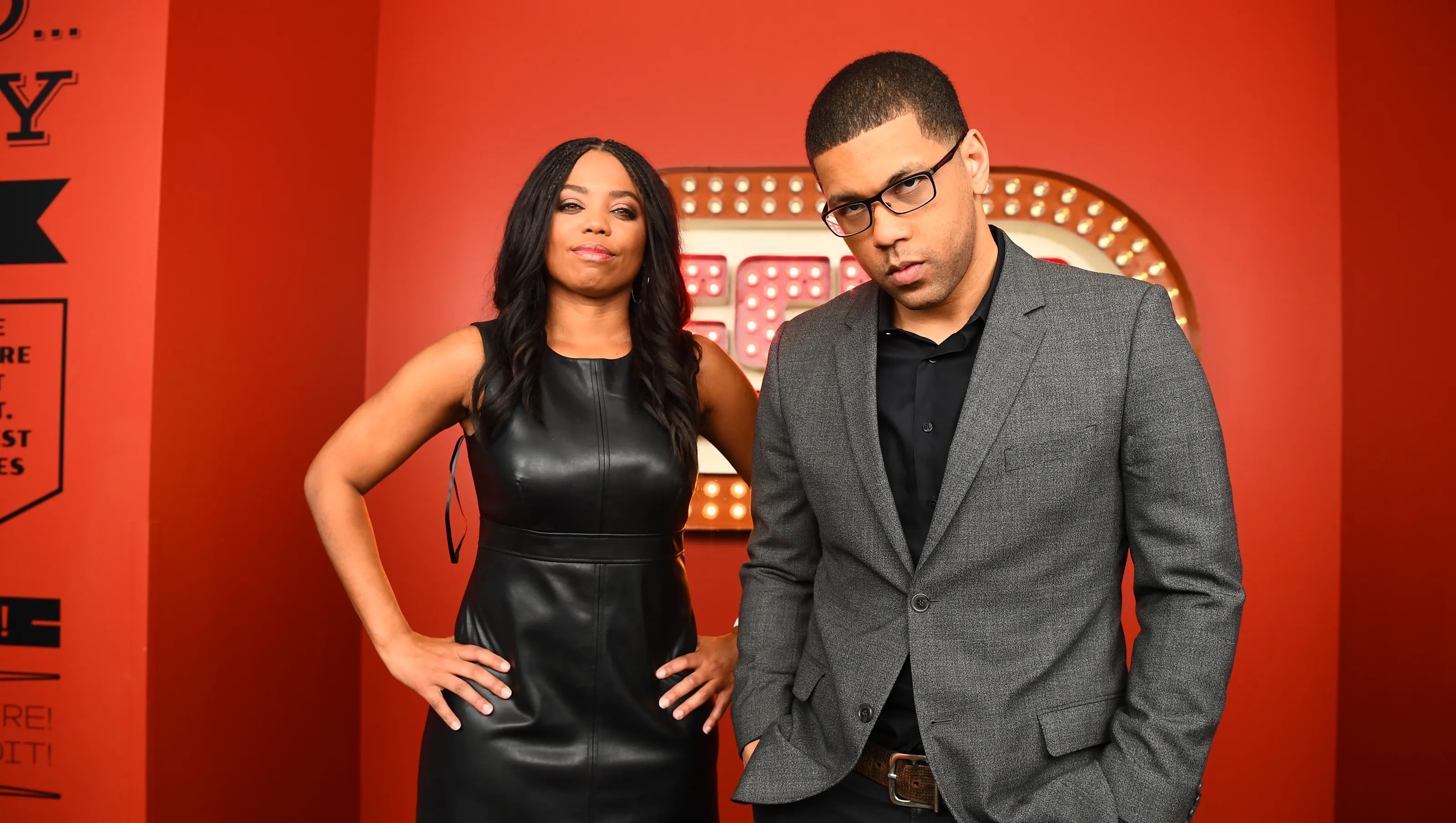
Jemele initiated the negotiations for her departure from ESPN. To this day, trolls and bots target her directly, harassing her about “getting fired,” yet she was only one among a massive purge of talent at ESPN. After all, both Cari and Michael left soon after Jemele. While modern talents like Ryan Clark and Monica McNutt continue Jemele’s legacy of Keeping It Real at All Times, the network has yet to recapture the verve of the Jemele Hill era.
Some enjoyable quotes that I wasn’t able to shoehorn into this piece:
Ch 11 pg 136-138 is more of a reference point than a full quote. Jemele, a diehard Detroit Pistons fan who grew up spiteful of the Celtics, “not gonna pass on shitting on Larry Bird. Great white hope.” She felt some sort of way about Black people cheering for the Celtics even during “The Boston Three Party” era. I shared similar sentiments.
“When I finally told [Dwyane] I wanted to end the relationship, I thought back to my mother’s coarse words, “It don’t make no sense to be laying next to a man with a wet cock when the rent ain’t paid.” A proverb.” (Hill, 115).
“Don’t have sex on your side of the bed. That way you will never be subjected to sleeping in the wet spot” (Hill, 121).
“The complaints that our show was too liberal and to political was bullshit. What they meant was ‘too black.’”
“Mike and I joked that ESPN wanted to make SportsCenter great again. Vanilla.”
 Blerd Beats