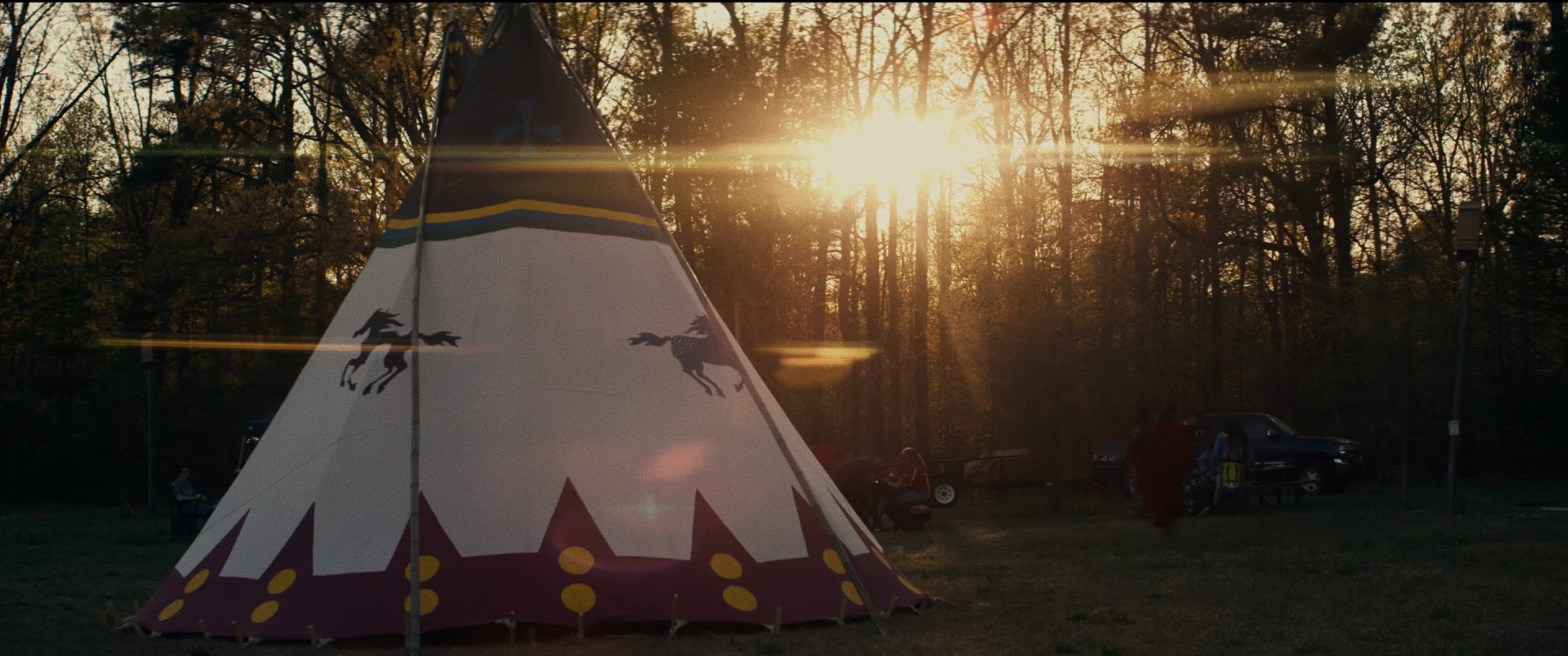
Juanita belongs in the Black Pantheon, but the draft for “Finding God in Tepees” began in 2019 and I am fond of the title. This piece remained in draft purgatory because I lacked language, the environment, and the courage to finish what began as revelation bordering on the sacrilegious: Indigenous People worship the same God as I do. Compounding my inner turmoil, a member of my writing team during my tenure as an editor at GUG introduced me to the “Finding God in [Places We Least Expect]” concept, notably launching her series of writings with the Legend of Zelda franchise. Tragically, she maintains politics that align with White Jesus the Colonizer rather than Jesus Christ of Nazareth, the Palestenian Jew, so while I do my due diligence as a writer to acknowledge who inspired the “Finding God in…” idea, I do so reluctantly, perturbed that a great idea came from an unsavory person.
Despite this, the Work must continue. For Daniel Fast 2026, I committed to reading through The New Testament in Color: A Multiethnic Bible Commentary, edited by Esau McCaulley. Thus far, I’ve only made it through the introductions, but McCaulley has already indicated several theological positions that I intend to elucidate in the future as I deconstruct decolonize my faith. For now, I will say that McCaulley’s writing reminds me of a scripture inscribed in the vestibule of Trinity Church of Lansing (now OneChurch), where I attended while I lived in Lansing for seven years: “My house shall be called a house of prayer for all nations” (Isaiah 56:7).
From 2006-2013, seeing this scripture every Sunday comforted me. Almost within a year of my wife and me joining Trinity, its congregation voted to hire a Black man as its senior full-time pastor. Immediately, this non-denominational church flourished from a racially blended congregation into an integrated one. Even as SCOTUS dealt a crushing blow to affirmative action in Michigan with implications abroad, Trinity Church recognized diversity as fecund for spreading the Gospel of Jesus Christ.
Post-Black Lives Matter, many practitioners of the faith may not even identify themselves as “Christian,” even though they believe in Jesus, the Palestinian Jew who was born into poverty, ruled by an oppressive regime, and hated by his fellow clergy. Despite all of this, He absolved us of all sin. No gatekeeping; only faith is required.
There’s much more to exvangelicalism than I would like to discuss here. For now, I will simply say that by the time I watched Juanita on a whim, I was already interrogating my relationship with American Evangelism and its relationship with White Jesus the Colonizer, including how even the problematic elements of Trinity Church’s ecosystem have been foundational to my faith. I began to yearn for faith traditions that are less charismatic, liturgical, or fundamentalist, and more social justice-oriented. Suddenly, the powwow scene in Juanita hit me square in the chest.
Before diving into Junita, I first want to dive into Isaiah 56:7’s preeminence in both my faith journey and Juanita. Verse 3 reads, “Let not the foreigner who has joined himself to the Lord say, / ‘The Lord will surely separate me from his people.’” Verses 6-8 read as follows:
“And the foreigners who join themselves to the Lord, / to minister to him, to love the name of the Lord, / and to be his servants, / everyone who keeps the Sabbath and does not profane it, / (7) and holds fast my covenant— / these I will bring to my holy mountain, / and make them joyful in my house of prayer; / their burnt offerings and their sacrifices / will be accepted on my altar; / for my house shall be called a house of prayer / for all peoples.” / (8) The Lord God, / who gathers the outcasts of Israel, declares, / “I will gather yet others to him / besides those already gathered.”
As early as the Old Testament, God prepared the framework to make space in his kingdom for both the gentile and the Jew: “This righteousness is given through faith in Jesus Christ to all who believe. There is no difference between Jew and Gentile,” (Romans 3:22, NIV); “Or is God the God of Jews only? Is he not the God of Gentiles too? Yes, of Gentiles too,” (Romans 3:29, NIV). While Jesus came through the heredity of “God’s Chosen People,” no ethnicity is to be excluded in his Divine Plan.
Now, before Junita’s encounter with God, she first escapes her dysfunctional adult children to Butte, Montana, settling in the fictional town of Paper Moon. With a shout, “Black woman in the kitchen, yall!” she endears herself to the local community, particularly the Indigenous People who invite her to a powwow. Full disclosure: ProWritingAid has been flagging “powwow” every time it appears with the note, “Potentially sensitive language. If you are not a member of an [I]ndigenous community, you may not want to use this word.” I appreciate the warning aimed especially at the melanin-challenged who might pervert the term as a synonym for “business meeting.” I am grateful that Homegrown Pictures and Mandalay Pictures tapped a Black director, Clark Johnson, who understood the importance of casting Indigenous actors and actresses in anticipation of the powwow scene as the script dictates. While the Indigenous actors and actresses represent a cornucopia of First Nations—Saulteaux Anishinaabe, Cayuse/Nez Perce, Tsimshian, Sac Fox, and Seminole, to name a several, in Juanita, they are Blackfoot. I am glad that director Clark Johnson specifies a Confederacy, because First Nations are as diverse as the Maghreb, Mestizo/a, or the Black diaspora.
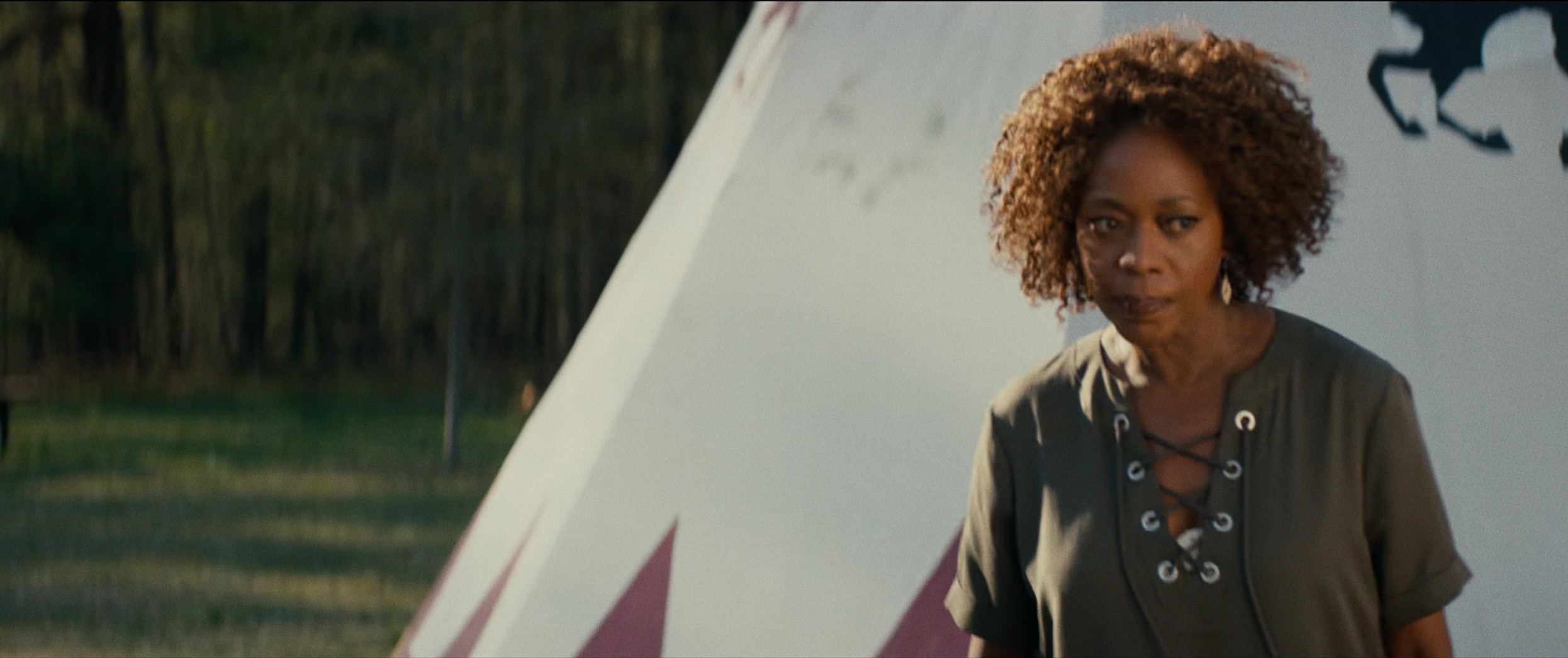
At the powwow, Juanita takes in the sights unaffably. As some Natives chant in the background, patrons congregate cheerfully, commiserate congenially, and consume comestibles. A mysterious sensation overwhelms Juanita, and she alerts her lover, Jess. She instructs him, “Take me over there, please. I need to sit inside.” She indicates the teepee. He offers her a seat elsewhere on the outside, and she responds, “No, I’m telling you I need to go inside.” She adds that her heart’s racing and she can’t breathe. Jess instructs her to listen to the beating drums; feel her heart beat[ing]. A shaman standing outside the teepee turns toward her and smiles knowingly with his teeth. He steps inside before her and wraps a red ceremonial skirt around himself. Juanita sits and takes in the deceptive voluminousness of the teepee’s interior as Jess massages her shoulders. Johnson further accentuates the teepee’s room when two priestesses and two more shamans enter, along with two of Juanita’s friends, one of whom adorns her with a white cloak.
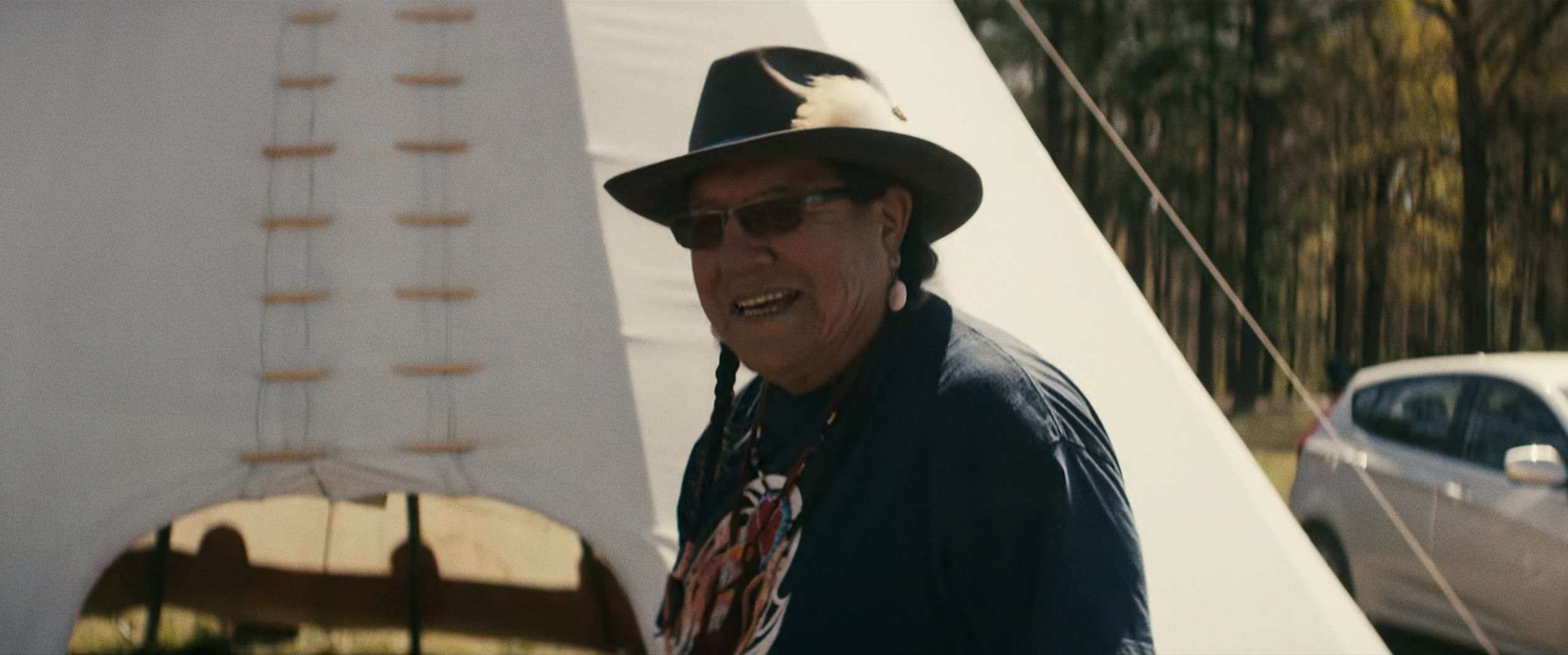
The friendly shaman explains to Juanita that the present company is going to pray over her, bless her, and cleanse her. Then they’ll sing a song for her spirit to heal her. As the shaman speaks another gestures to Carl (Joseph Yates), Juanita’s white male friend, to leave from under the arm of his Native girlfriend, Mignon (Eagle Smith), walk across the room and sit with the shamans who are now wearing headdresses; if he marries her, he might have to learn how to conduct what is to transpire. Mary (Tsulan Cooper) adorns Juanita with earrings. The shamans and priestesses sing, burn incense, beat their membranophones, and shake their idiophones; with their holy accoutrements, the shamans somatically “bathe” Juanita. Visibly relieved with tears welling in her eyes, Juanita bows in gratitude because GOD ANSWERS PRAYER!
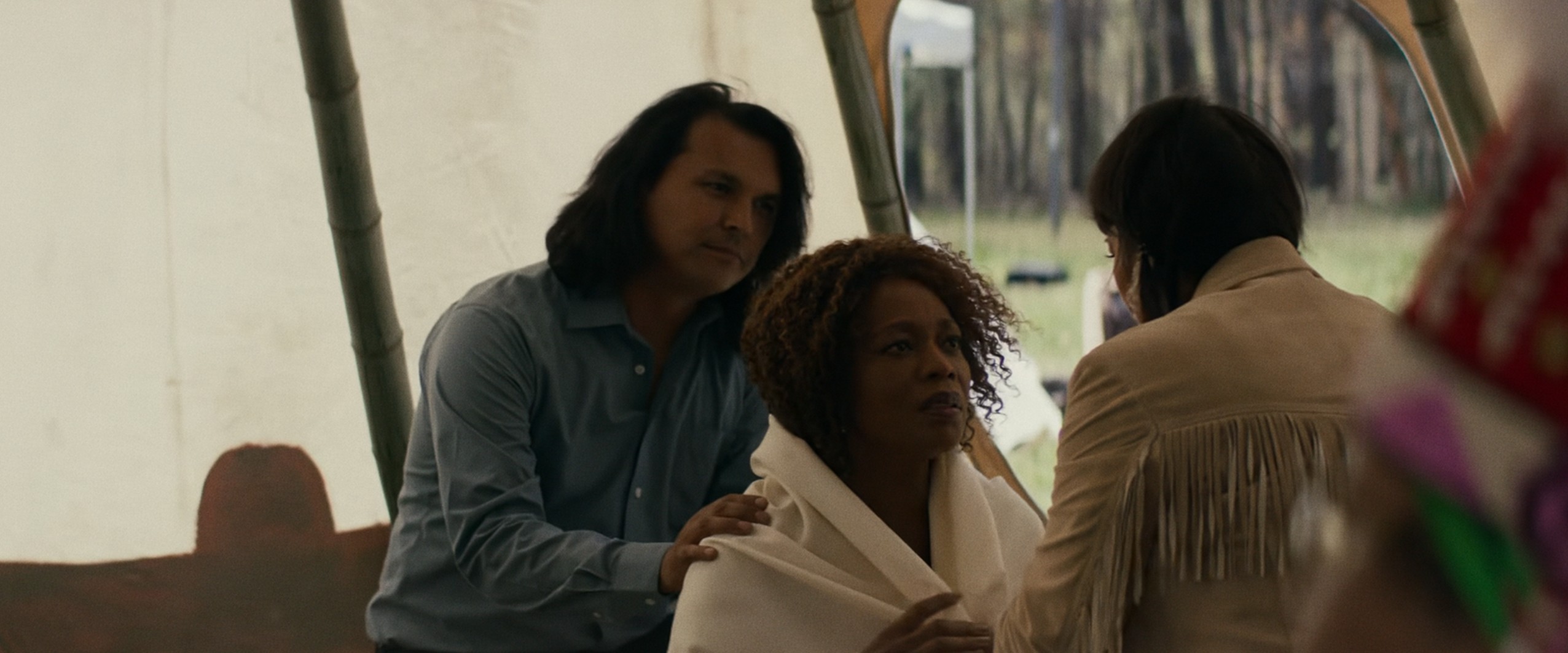
The shaman’s prayer is:
“We ask the Creator to help us to bless us and watch over you. We ask all the spirits of the earth to come and help you. We ask the old people, our holy people, the ones that passed on, to come and help you, so all your energy that will go inside the smoke will go into the Creator’s world so that you will think of all the things that will help you. All your relatives that come and help you as we sing this song for them, we call on their spirits to come in and give you a hand. We cleanse your body so you can travel in a good way. Your life will be good again. It’s up to you to keep it that way. Thank you.”
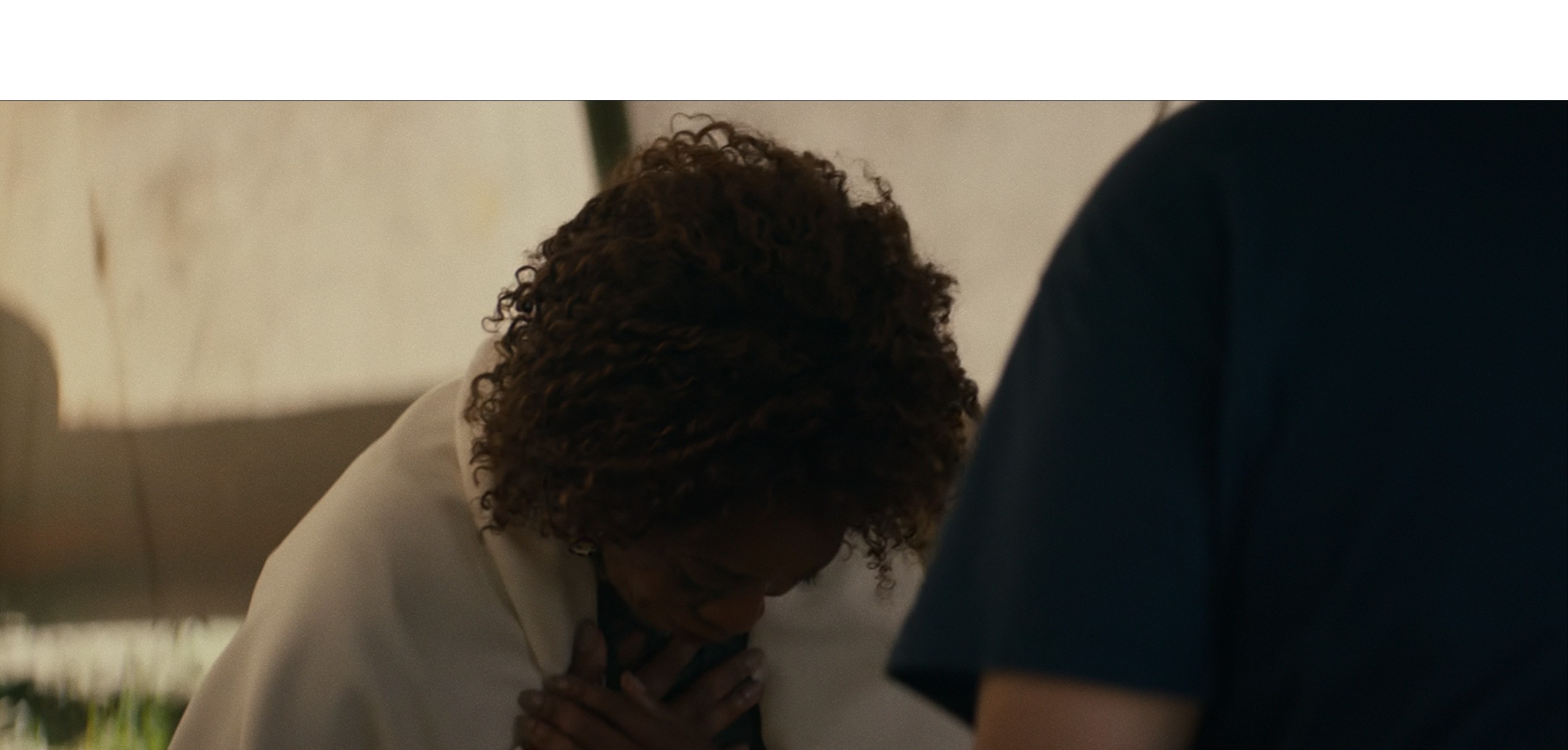
To translate this prayer into Christianese, God almighty is the Creator. Evoking the spirits of the earth parallels the caretaking of God’s angels (alternatively one may exorcise evil spirits or demons). Granting deference to the elderly (Leviticus 19:32) and those whose calling is to spread the Gospel of Jesus (1 Thessalonians 5:12), as well as recognizing the saints (1 Thessalonians 4:13-18) are Christian customs. The burning of candles and incense is a universal practice among all faith traditions. Petitioning for the blood of the Son to cleanse us of impurities so that we may perform the Lord’s holy work unblemished is a common Christian ritual. Of course, God grants us the freedom to choose his blessing.
While the shaman does not call upon Jesus’s name as we do in Christian tradition, I underscore how he calls upon the Creator—God—for the blessing. The powwow scene in Juanita is paradigm-shifting; American Evangelism taught me to dismiss—disrespect even—non-Western faith traditions. It belittles anything outside of its theological framework as pagan or worse: dismissed; vilified; cursed. Yet during the powwow scene in Juanita, the titular character experiences God in a way that reminds me of when Jesus said, “When two or three are gathered in my name I am there, also (Matt 18:20, NIV).
Yes, Jesus says that he is the way and the truth and the truth and the life. No one comes to the Father except through me (John 14:6). Yet I wonder: we as Christians ritually end prayers with “in Jesus’s name,” as if God requires specification or distinction; we also believe in the trinity, a word that does not appear in the Bible but theologically derived from scripture and codified in worship as with “Holy, Holy, Holy! Lord God Almighty!” What about those who call upon God in ways that do not align with Christian traditions? Again, I think about Isaiah 56, and God’s inclusiveness, for the worship of God predates organized religion, because God had made himself known to all: “For what can be known about God is plain to them, because God has shown it to them. For his invisible attributes, namely, his eternal power and divine nature, have been clearly perceived, ever since the creation of the world, in the things that have been made. So they are without excuse.” (Romans 1:19-20).
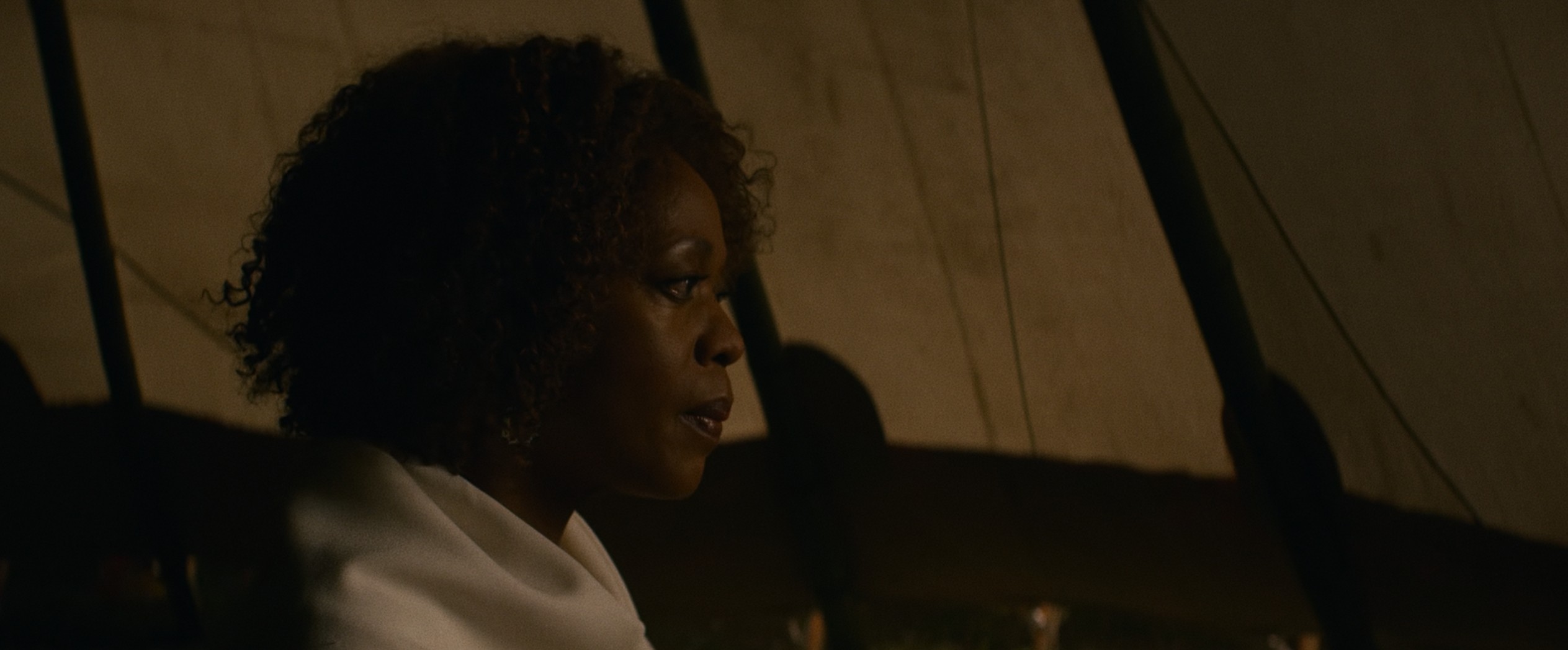
Though Juanita was not even actively searching for God, God found her as far away and as high as the mountains of Montana, providing comfort not within the walls of a church, but in (a) faith tradition(s) as old, if not older, than Christianity.
As I transition toward The New Testament in Color, I will maintain an open mind in anticipation of what God desires to reveal to me even through unconventional mediums.
 Blerd Beats
What a compelling work of literary art. Both the movie and this article. As someone who grew up near indigenous peoples , this brought happy memories back of entering a teepee for the first time and be blessed by the dances/tributes I was able to observe. Thank God for decolonization and appreciation for all of Gods people instead of judgement and evangelical pride.
LikeLike