When I was on the yard at Tuskegee, there were only two visible D9 fraternities: the clandestine Alphas, and the ubiquitous Omegas. The first time I saw an Alpha was when a classmate wore black and gold paraphernalia to English class after he had crossed; others would appear soon thereafter. Meanwhile, the Omegas militantly wore their fatigues and gold-painted boots like a daily uniform. Since I had grown up with an affinity for No Limit, and the Ruff Ryders, I dug that style. My freshman roommate’s bio dad was also an Omega, and he sold me on the possibility of pledging when the time came.
And came it did. At the behest of my roommate whose father was an Omega, I attended the local Lambda Epsilon (ΛE) chapter of Omega Psi Phi Fraternity, Inc. (ΩΨΦ)’s informational. I wallflower’d at one of their parties. I danced with my then-girlfriend, now wife, at an Omega ball (I would learn later that her father crossed Omega, ΛE chapter, in ’68). After a night where the ΛE Omegas invited about a dozen of us—sans my roommate who didn’t make the cut but would pledge in another chapter after he left Tuskegee—to meet behind the campus bookstore trailer, I determined to have a “ground rules” conversation with one of its members who lived on my floor at Banneker Hall. I told him that nobody was going to put their hands on me. He replied with something to the effect of “Well then, I guess you gotta do what you gotta do.”
So ended my brief period “on line” for the Ques. I tell this story in light of events from earlier this year, when Caleb Wilson succumbed to his injuries after experiencing hazing from the Omega Psi (ΩΨ) chapter of Omega Psi Phi. Southern University has since expelled the chapter from campus—as in, they ain’t coming back. Ever.

And I’m not just picking on the Ques. For my entire undergraduate experience on campus at Tuskegee, the Gamma Epsilon (ΓΕ) chapter of Kappa Alpha Psi Fraternity, Inc. (KAΨ), was suspended from campus because of hazing (allegedly). The Gamma Tau (ΓΤ) chapter of Delta Sigma Theta Sorority, Inc. (ΔΣΘ), was also suspended, but returned at the end of my senior year; some say that spring 2006 line had 60+ members! While researching for this entry, I learned that the ΓΕ Nupes returned to campus in 2007. According to the inactivity on their Instagram page, ΓΕ served a suspension during the fall 2024 semester for reasons publically unknown. Spring 2025, they returned in style. Today, the Nu (N) chapter of the Deltas is presently not on University of Michigan’s campus.

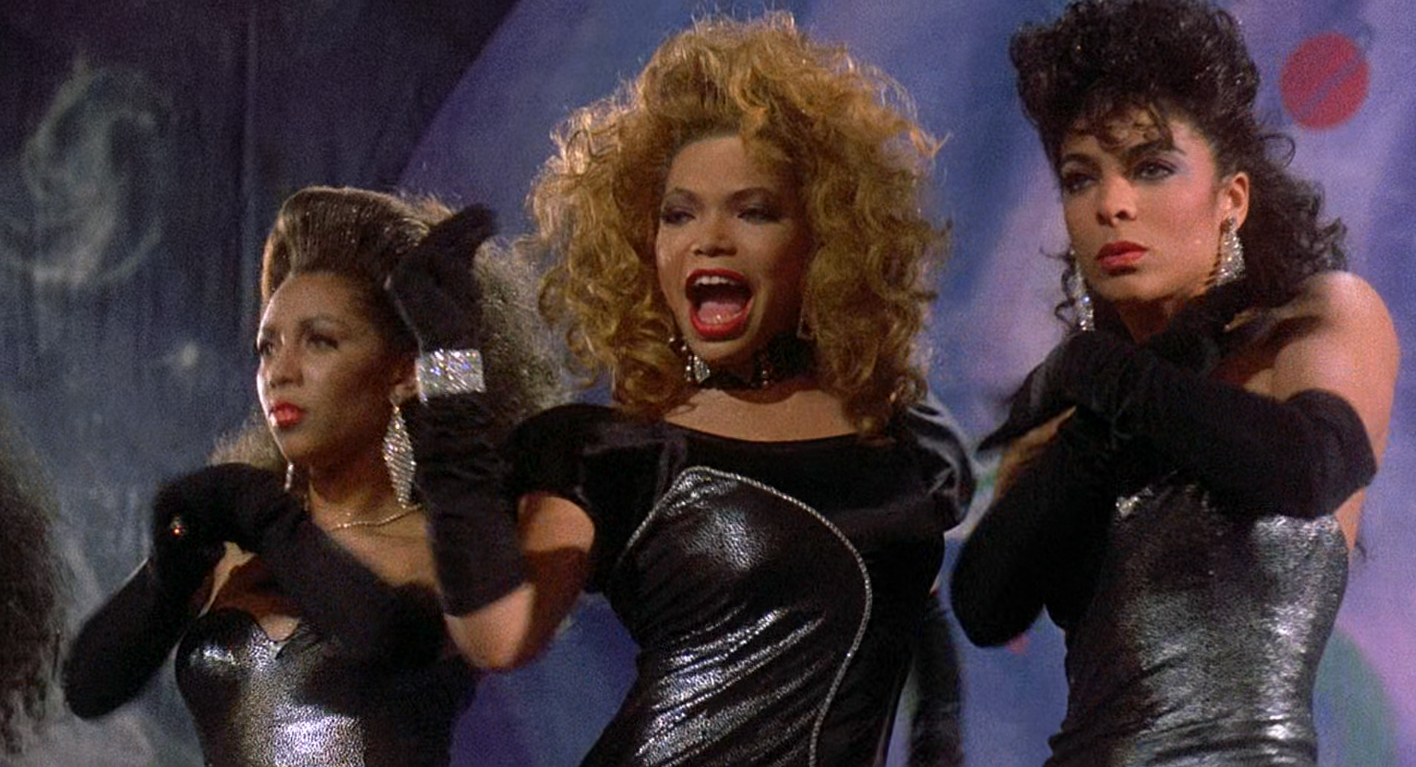
Spike Lee’s School Daze is one of those movies I’ve seen multiple times at various stages of my life: as a high school student aspiring to attend college; as someone who graduated from an HBCU; and before I became a member of the Divine Nine, and afterward. Lee’s cynicism toward HBCUs after his experience at Morehouse exudes from the film even in 2025. So much has changed since he graduated in 1979, and released School Daze in 1988, yet so much also has not. Lee raises attention toward the precarious nature of HBCU funding and how they are reliant on white paternalism echoes deafeningly as 45/47 contemplates dismantling the Department of Education. My alma mater is a top-5 HBCU (XULA grads disagree), but not in the top 10 in endowments as a private school.
While HBCU administrations remain a hot mess—just ask anyone trying to go to Howard—they are not the primary focus of the film. Greek life takes center stage, as Spike Lee himself plays as the (fictional) Gamma Phi Gamma aspirant, Darrell “Half-Pint” Dunlap. Okay, now, Lee is picking on the Ques.

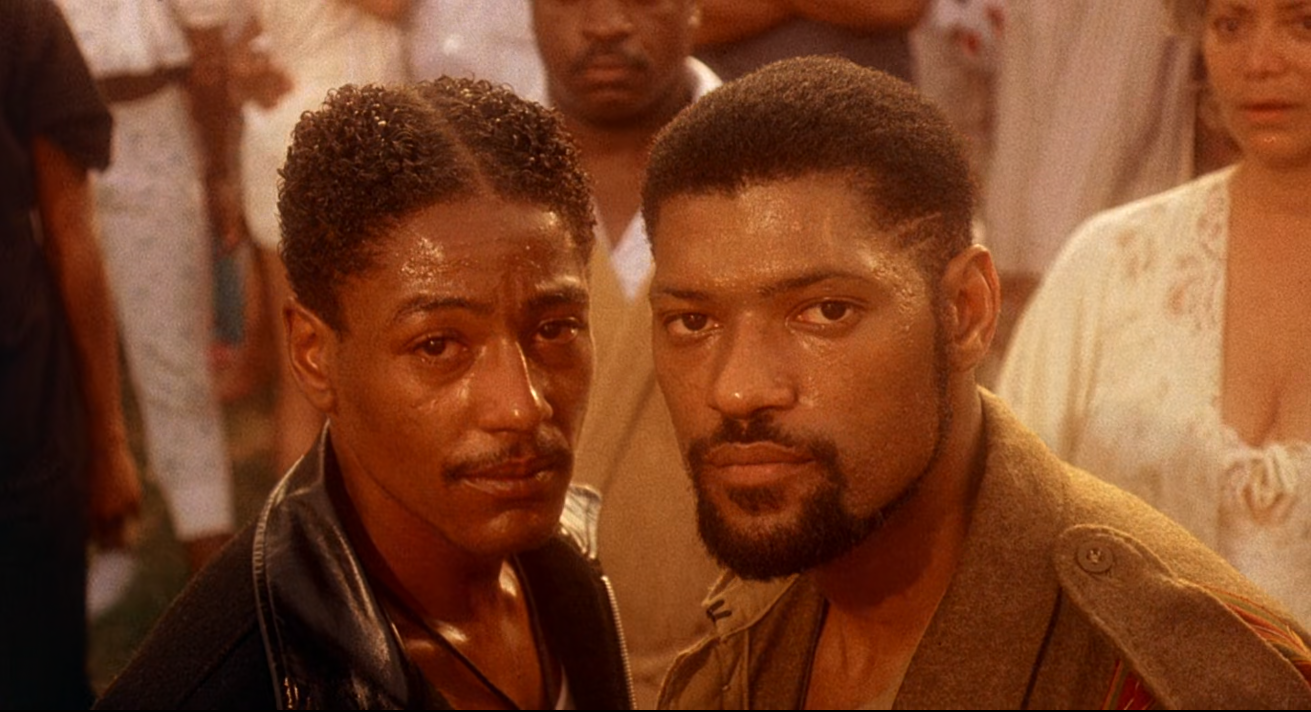
Gamma Phi Gamma first appears crawling on all fours linked by chains and dog collars, chanting “G-Phi-G, that’s what I wanna be!” Other egregious scenes of emasculation include Julian (Giancarlo Esposito) requiring that Gammites refer to him as “Dean Big Brother Almighty.” He is their deity, and for their god, they bark. They eat dog food. They sing various nonsense when paddled. Blindfolded, they fish their hands into commodes for turds—thankfully, peeled bananas—highlighting how hazing takes as much a psychological toll as it does physiological, yet also what lengths aspirants have, and will go, to become Greek. Lee makes his disdain for hazing transparent.
While Lee rightfully crusades upon hazing for most School Daze’s runtime, he juxtaposes his campaign alongside a step show featuring Alpha Phi Alpha Fraternity, Inc. (AΦA). If this were an essay, I would take more time to unpack this scene; the Alphas are the first time the film highlights a non-fictional BGLO beyond a passing glimpse. I would like to say that this is Lee’s way of validating the legitimacy of BGLOs beyond the misdeeds that would render them infamous.
Every BGLO maintains some sort of anti-hazing policy, but they didn’t always. For example, KAΨ was founded in 1911, but did not ban hazing until 1949. However, according to Lawrence C. Ross, Jr., author of The Divine Nine: The History of African American Fraternities and Sororities, the pledging process could span to a year. Over decades, the process shortened to a semester, while by the 1980’s, the process lasted six to eight weeks. BGLOs likely directed their respective chapters to reduce the rigor of pledging while intending to mitigate the probability of a tragic hazing event. I suspect that the death of Van L. Watts in 1983 on the campus of Tennessee State University both spurned BGLOs into some sort of action, and also inspired Lee to bring School Daze into fruition, featuring Gamma Phi Gamma as stand-ins for Omega Psi Phi, the organization responsible for Watts’ expiration. Unfortunately, abbreviated pledging processes were insufficient, because Joel Davis succumbed to his wounds during a hazing event while pledging for Alpha Phi Alpha in 1989.
In the 1990s, BGLOs outlawed pledging, some of which placed a moratorium on all lines until the establishment of a universal Membership Intake Process (MIP). After Michael Davis succumbed to his injuries while pledging for the [redacted] chapter of Kappa Alpha Psi at Southeast Missouri State University in 1994, BGLOs realized that pledging had not ceased on command; it had simply gone underground.
Shawn A. Blackston (1997, Louisville University chapter of Omega Psi Phi) Joseph Green (2001, Tennessee State University, Omega Psi Phi), Kristin High and Kenitha Saafir (2002, California State University Los Angles, Alpha Kappa Alpha Sorority, Inc.), Donnie Wade II (2009, Prairie View A&M University, Phi Beta Sigma Fraternity, Inc.; this is neither a comprehensive nor final list of hazing victims in Black Greekdom, but along with Caleb Wilson’s death, they are among the most scandalous. After reading volumes of material about how to solve the pledging/hazing problem—the terms are quite interchangeable; if aspirants enter a “pledging process,” hazing is inevitable—I am unsure if a solution is possible, because the problem is multifaceted.

The game begins with BGLOs vetting candidates through interactions that take place during public-facing events like summer picnics or New Year’s parties. Seemingly innocuous interview questions such as “Why do you want to join us?” are allegiance tests. (Had I answered this question truthfully, the answer would have been, “A family friend asked if I was Greek, and I said no. They said I should join his frat, so here I am.” Instead, I made up some nonsense made to sound like I had always aspired to join.) Noone who would likely betray the org/chapter by snitching is even supposed to get a chance to be on line. Moreover, some candidates engage with these organizations expecting some level of hazing given their organizational histories as Lee and I have illustrated in the paragraph above. Willing participants raise the question, should victims of hazing be culpable if they allow themselves to be hazed?
Peer pressure compounds these dynamics. If a member of a line reports unsavory activity, that entire chapter, let alone the line, could be in jeopardy. Who wants to bear the responsibility of sabotaging upwards of thirty or more line brothers or sisters’ lifetime aspirations to join this organization? Some of them are legacy, which means the snitch might hear from them, too!
During chapter meetings, members ask their brothers or sisters publicly if they are aware of any hazing activities in the organization. All have signed documents confirming their obligation to report hazing incidents. But confessions, let alone incriminating admissions, just do not happen for risk of becoming a pariah because the perpetrating chapter risks suspension from the organization.
Hell, even the organizationally sanctioned MIPs can be psychologically daunting. All BGLOs require that aspirants memorizes the first, middle, and last names of their founders. The Ques have it easy because they only have four. But a certain sorority has to commit to memory twenty two founders, usually within a week or risk the shame of censure. Consider the (di)stress stack when instructed to memorize the full names of a chapter’s charter members within two day’s time. These unreasonable asks, too, are part of the game. Someone already part of the BGLO of choice may have warned a legacy or close friend candidate what they can expect. So while those struggling with schoolwork, or for alumnae/alumnae candidates a full-time job, fumble over all of these names, the “specials” will have prepared for weeks, months, or years. Rather than a paddling for failure, candidates endure embarrassment through a lack of knowledge, cohesion, and solidarity.
But it doesn’t count as hazing if the BGLO requires all candidates to do it!
Until the incentives for snitching supersede the social penalties for doing so, I do not see underground pledging—like the night I spent behind the campus bookstore instead of in a classroom going over MIP materials—disappearing. Especially when there are knuckleheads like this guy who want to bring it back out of the underground.
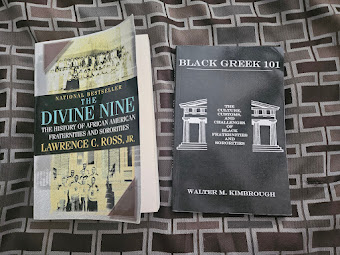
A note on research: writing this article is a lesson on how the internet really isn’t forever. Hopefully in good faith, smaller local news outlets have delisted old articles to make space on their servers; for profit, larger outlets have paywalled their archives. Unfortunately, many victims of hazing are also victims to this capitalist hellscape. The misspelling of names, cloudy details, incorrect dates, omissions of victims, and wiping the internet of evidence are among the obstacles I encountered while writing this. Thankfully, the Wayback Machine exists, yet I unsuccessfully corroborated the death of Harold Thomas, a student at Lamar University, who allegedly succumbed to a hazing event involving Omega Psi Phi. I have seen 1984, 1987, and 1992 as listed dates. Neither Ross Jr.’s The Divine Nine nor Walter M. Kimbrough’s Black Greek 101: The Culture, Customs, and Challenges of Black Fraternities and Sororities contains data on Thomas. Perhaps one day, his full story, among others, will come to light.
 Blerd Beats