
“A New Home”
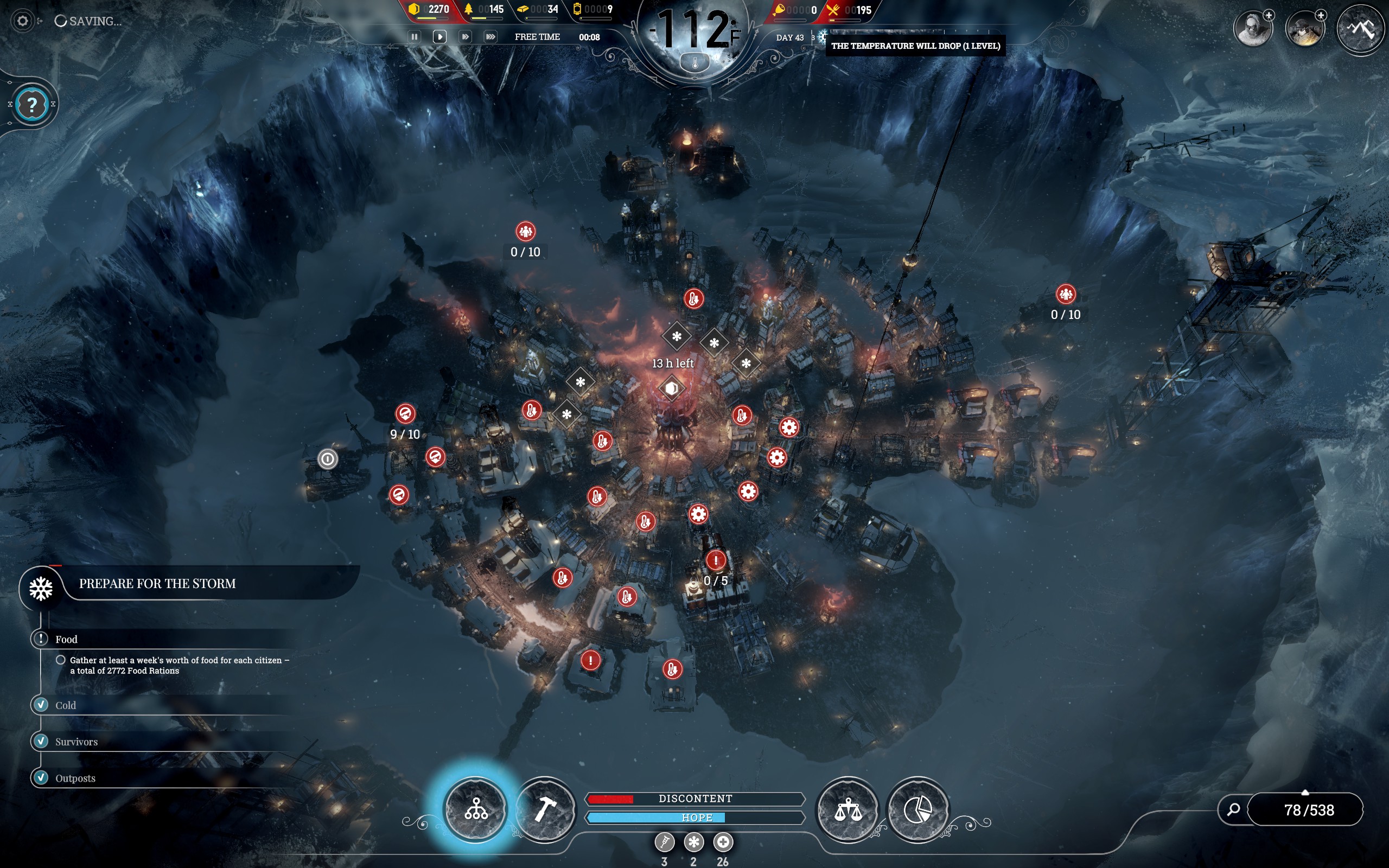
Above is the day before the Great Storm, Frostpunk‘s “final boss.” Veterans to this game will notice my tents and lack of upgrades for my steel mine and mountain drill. They may also spot my inadequate food and coal. Indeed, I exhaust both immediately.
Teeth clinched in a grimace, I fast forward the game at maximum speed through the final three days. With the generator dead and my food rations depleted, my colony suffers atrociously. Denizens freeze to death by the dozens. Dozens more choke to death on their shoe leather rather than suffer from starvation. My medical posts, care houses, and solitary infirmary overflow with the convalescent. The few who could work refuse. Even my Oath Keepers disobey me. With no hope and maximum discontent, my colony threatens to oust me. 310 citizens are hungry, and 283 are starving; 208 are sick, and 102 are gravely ill. I now wonder what the Game Over screen is about to say.
And then the storm ends.
Um, excuse me, lol? I cannot believe that I survive! If Frostpunk had an epilogue mod that allows players to continue beyond the Great Storm, I am certain that 300 citizens would die within the (in-game) hour. It was bad.
Frostpunk‘s gimmick—what makes it effective as a survival city builder sim—is players initially not knowing what to do. Mistakes make the gameplay, and Frostpunk‘s reticence to hold hands until after a crisis propagates them. By the time the game prompts players to provide solutions for necessities such as food or heat, they are behind schedule. The basic challenge of providing adequate food and shelter for the workers who cultivate the city bewilder enough, but managing sickness can snowball rapidly. Sick workers do not work, so the colony could fall into a deficit that is not readily detectable until an hour or two later of real-time gameplay when temperatures approaching absolute zero shut down the medical posts and ironically-named hothouses.
For example, during my fist “New Home” playthrough whose end I describe in this piece’s opening, I signed nothing in my Book of Laws for several days because every option seemed unnecessarily cruel. A 24-hour workday that negatively impacts discontent and hope upon signing? Yikes! Soup or additives like sawdust*? Disgusting! Child labor? Horrific! (I recently Googled how wood pulp affects the human body and learned that wood pulp, called cellulose, remains an additive in food since 1973! WTF!?!? American food is trash!)
I should have recognized the developer of This War of Mine, a game so heartbreakingly brutal that I quit, by name. 11 Bit Studios knows about encouraging players to make impossible choices. Early game food scarcity, lack of workers to build and gather, and the urgency created from the descending temperatures forced me to manipulate my citizens into worshipping a god who did not exist, let alone having any intention of saving them. Yet my colony managed to survive. Barely.
I returned to “A New Home” after trying other Frostpunk scenarios. With a fundamental understanding of the game’s mechanics, my second playthrough was facerollingly easy. Zero Londoners abandoned me. My food stores burst at the seams. I accumulated a week’s reserve of coal for my generator. Unfortunately, I inadvertently “crossed the line,” resulting in an ambiguous instead of happy ending. Under the faith tree, I researched “Righteous Denunciation,” not because it occasionally lowers discontent, but because it provides occasional resources—allegedly stolen. I was pissed at first that my Golden Path achievement playthrough was ruined even though I intended no harm, but upon reflection, “Forced Confession” does sound like some Ministry of Truth reprogramming from 1984. Perhaps I will try one more time before moving on to Frostpunk 2.

Yeah, Frostpunk 2 is out. That’s what motivated me to play Frostpunk in the first place. This is Backloggery Beatdown, after all.
“The Arks”
I consider “The Arks” a pleasant cooldown from “A New Home.” This scenario showcases the possibilities with automations. Constructing a practically fully-automated colony is more fun than difficult, and I will be returning to this for the “Rise of the Machines” achievement.
“On the Edge”
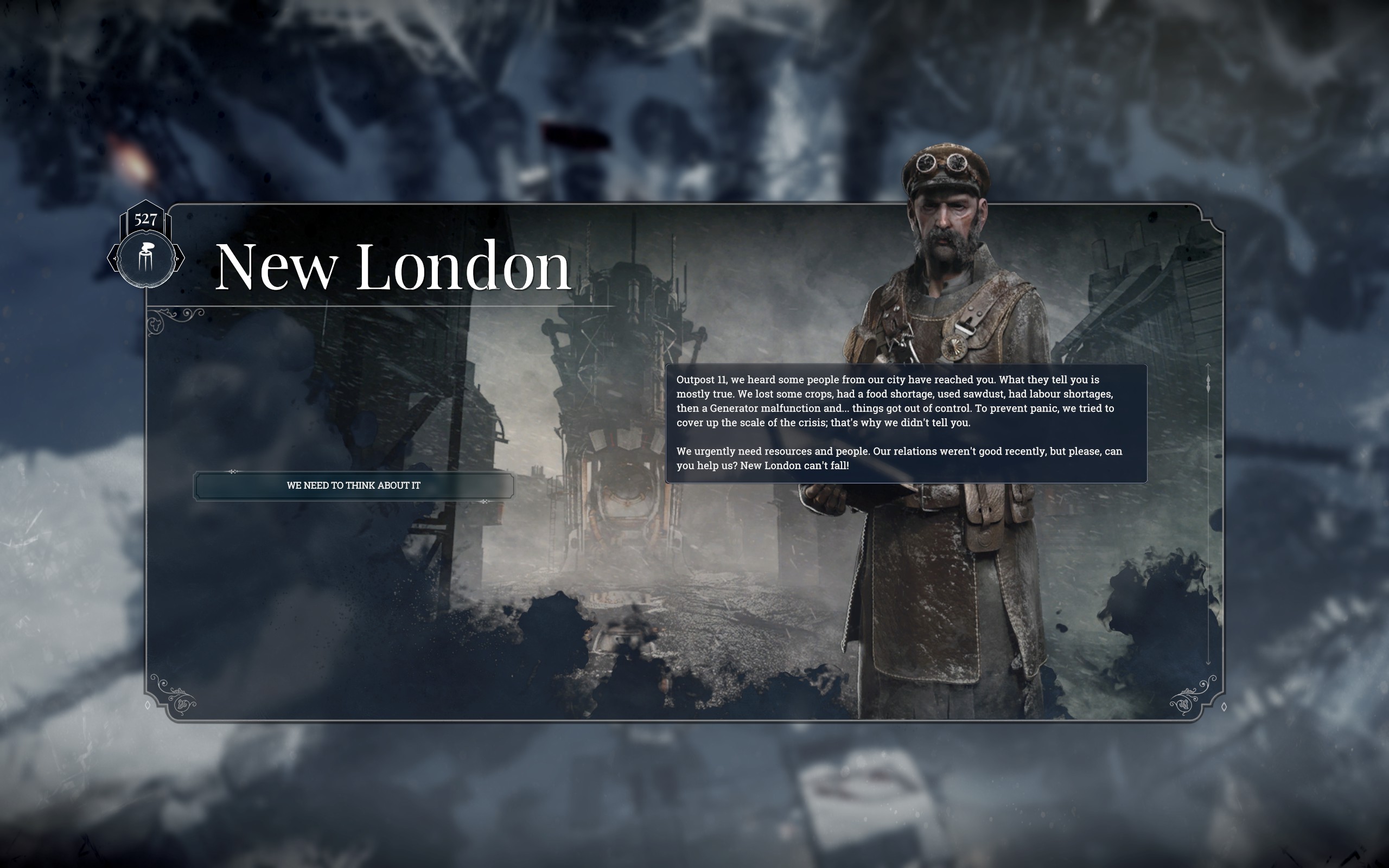
Canonically, the survivors of “A New Home” name their colony New London, and they send a team to Outpost 11 as New London has exhausted its ability to care for its own. Frostpunk hints this to players when New London sends the Outpost 11 their children unannounced. Because New London dictates Outpost 11’s technological and civic evolution, players have no method to research to solve problems, such as hunter’s huts for food. Eventually, New London becomes abusive and gaslighting, and I choose to break off and become independent. To sustain myself, I befriended two factions: some luddites for food, and some (ex)convicts for labor; I did not need the coal from the children’s mines. Eventually, New London asks me to save them, and because I am not an asshole like the dude who was barking orders at me, I did.
“The Last Autumn”
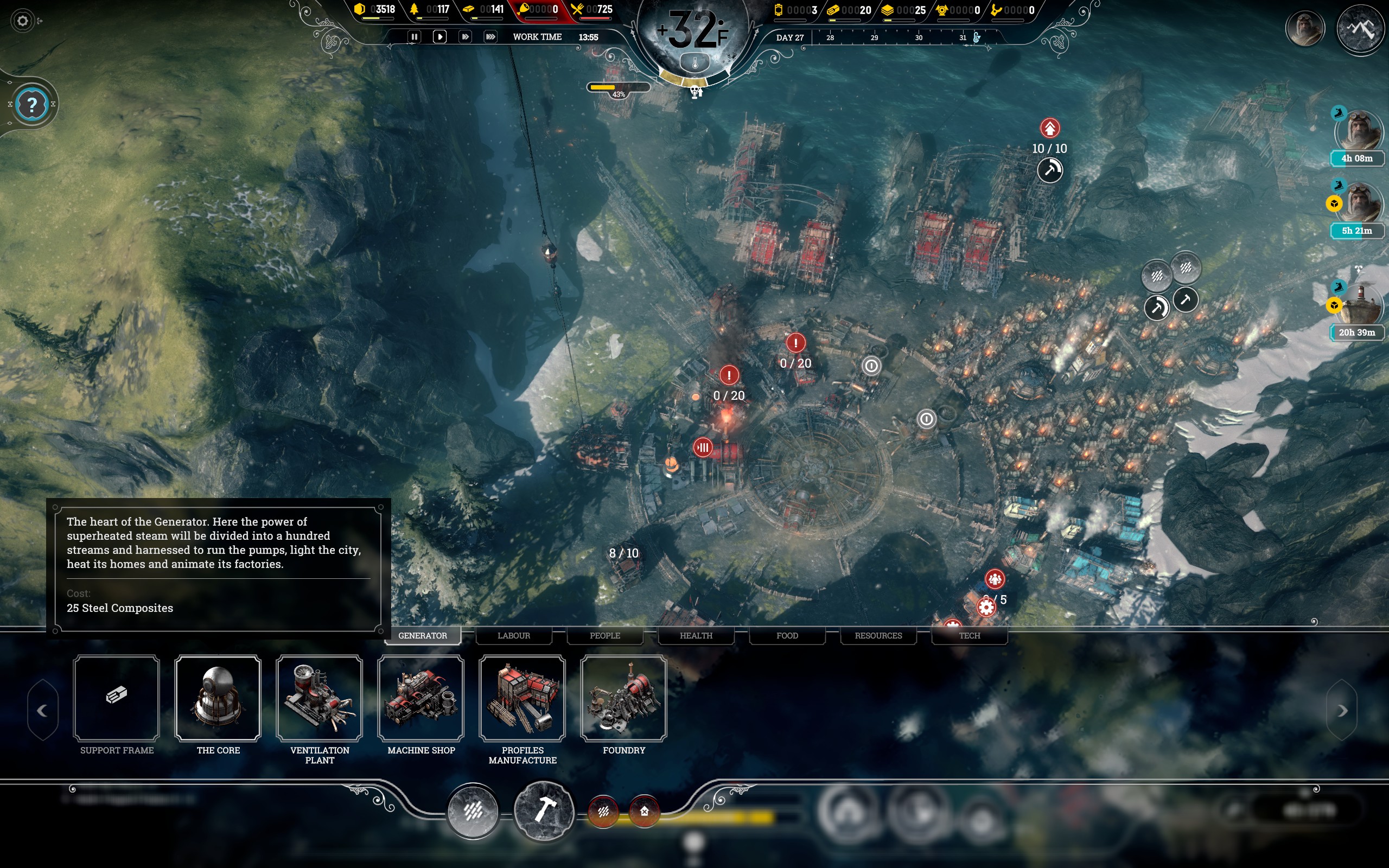
Without the frequent challenge of the cold, I found this scenario another peaceful reprieve. I would have made an outstanding industrial engineer; I supervised the construction of every part of the generator on time and without flaw. That said, this scenario provides context for how “The Fall of Winterhome” could happen for the less-talented. Sucks to be mediocre, I guess.
“The Refugees”
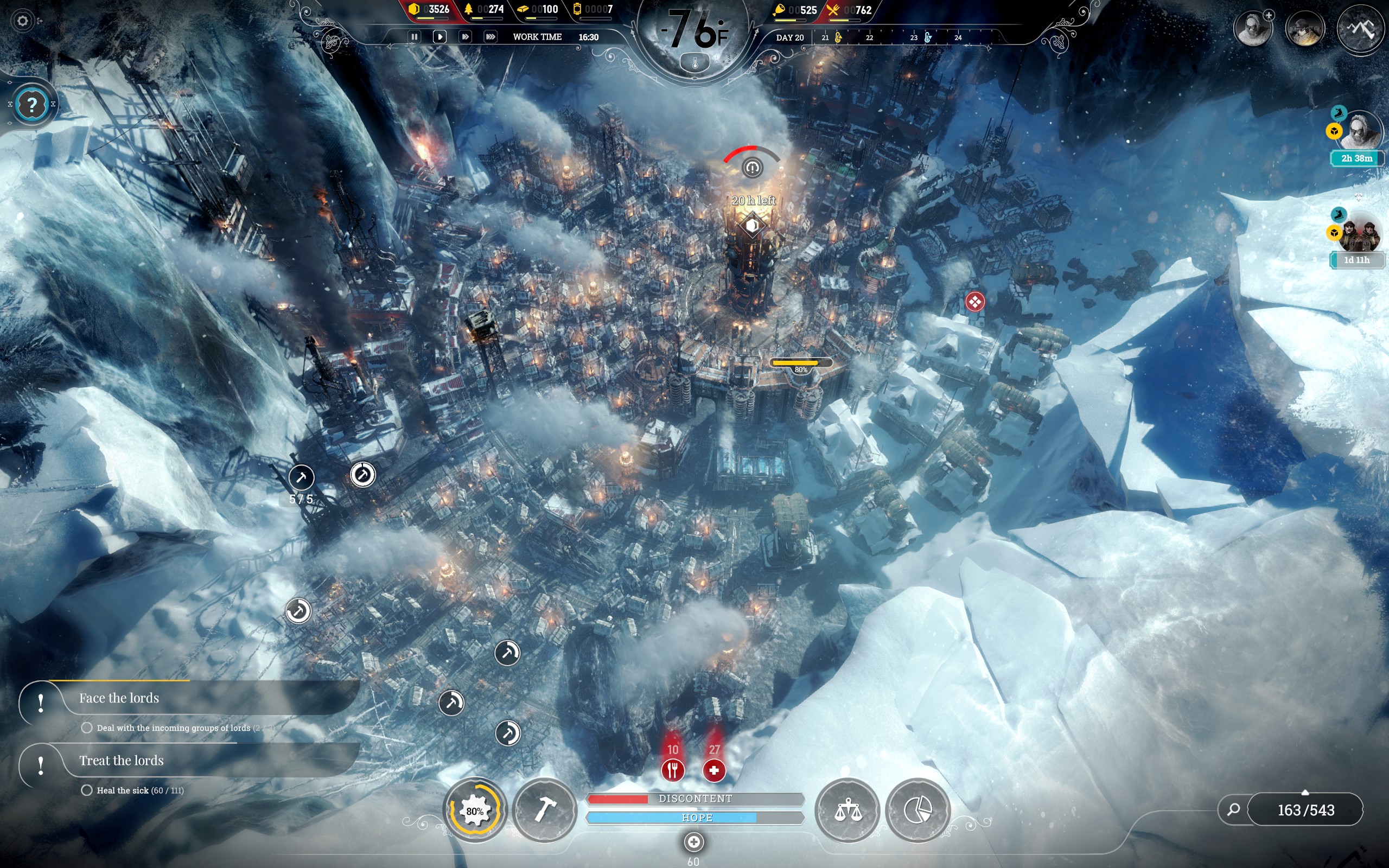
“The Refugees” challenges players by overwhelming them with a population to support. Indeed, one can only earn the good ending by granting “refrigerator rights” to literally hundreds of survivors. Applying what I had learned concerning illness prevention, I flood the area with homes as soon as the game notifies me that new arrivals are on the way. If I can keep everyone warm, I will have practically infinite labor to make up the deficit in food and tech tree advancement. Yet despite caring for the basic needs of my people, class warfare destabilizes an otherwise harmonious community.
Given what happens in “On the Edge,” 11 Bit Studios shows, rather than tells, that the fall of humanity will come not from natural disasters, but man-made problems that are preventable. Money may fund the construction of a generator in “The Last Autumn,” but labor supplies the coal to keep it burning. Man, it’s a real shame that there are no true socialists movements in 2025….
“The Fall of Winterhome”
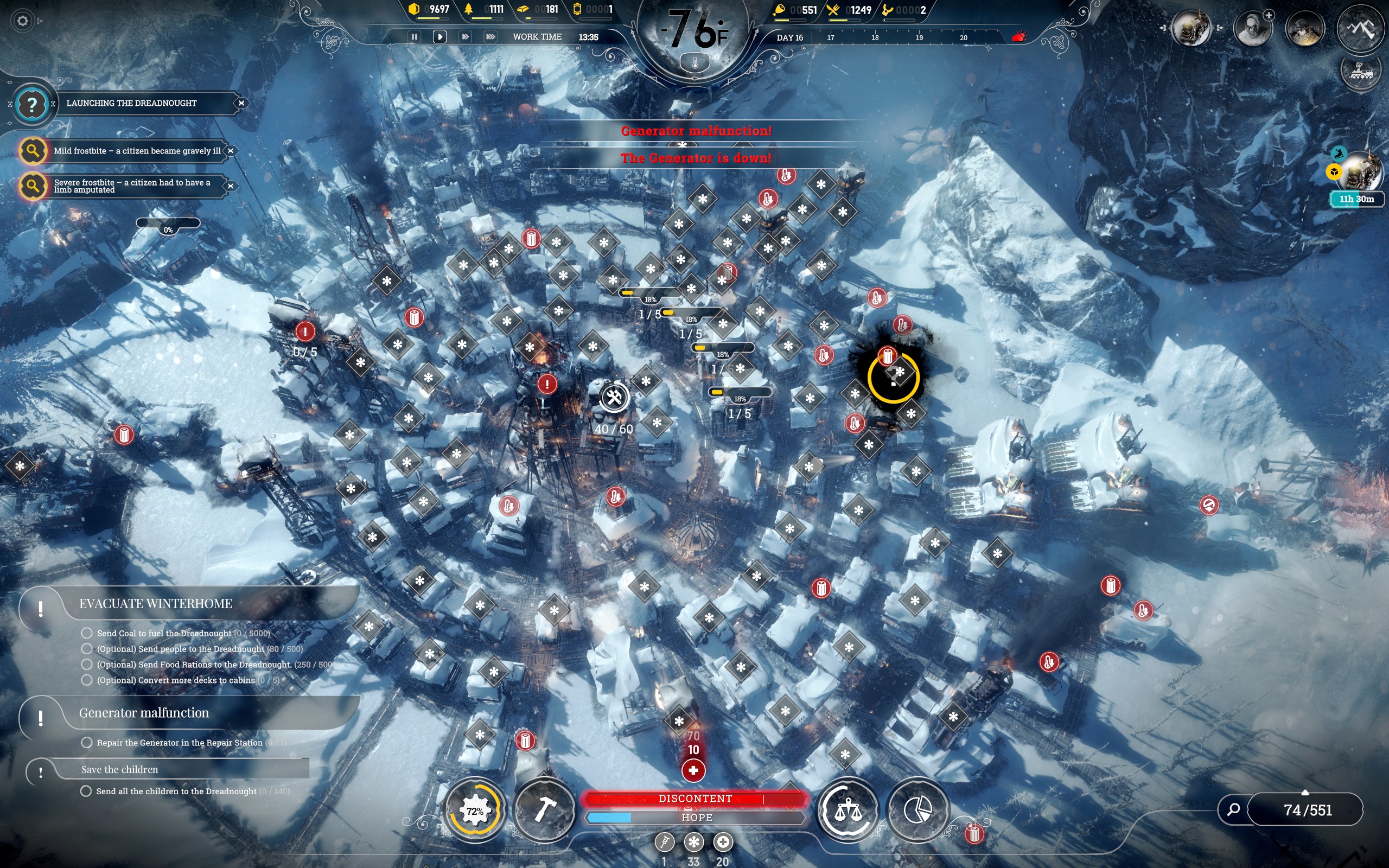
While “A New Home” is Frostpunk‘s primary scenario, “The Fall of Winterhome” is its prequel, and the most difficult of all the scenarios in the game. I inherit Winterhome in a post-rebellion state. Its denizens have already executed the previous captain and dumped the corpses of his regime in a mass grave segregated from the general population’s gravesite. Artic temperatures and precipitation cannot dissipate the glow of the embers from the proceeding violence and destruction.
With the sum total of all that I have learned while playing various Frostpunk scenarios, I put the community’s children straight to work. They sift through the ruins for recyclable wood and steel. Able-bodied adults rebuild houses for warmth and erect medical posts to heal the injured. Sickness from the cold would snowball Winterfell Winterhome into an unrecoverable state. Then again, this scenario is “The Fall of Winterhome”; I am not actually supposed to save it. Sure enough, just when I think I have established societal homeostasis, the generator falters. With considerable effort, my engineers stabilize it, but the repair is temporary. With the generator in a terminal state, hope plummets, and denizens threaten rebellion. I cannot remember if the plan to evacuate via the Land Dreadnought from which the populace arrived was the idea of the engineering team, but I focused all energies towards the effort.
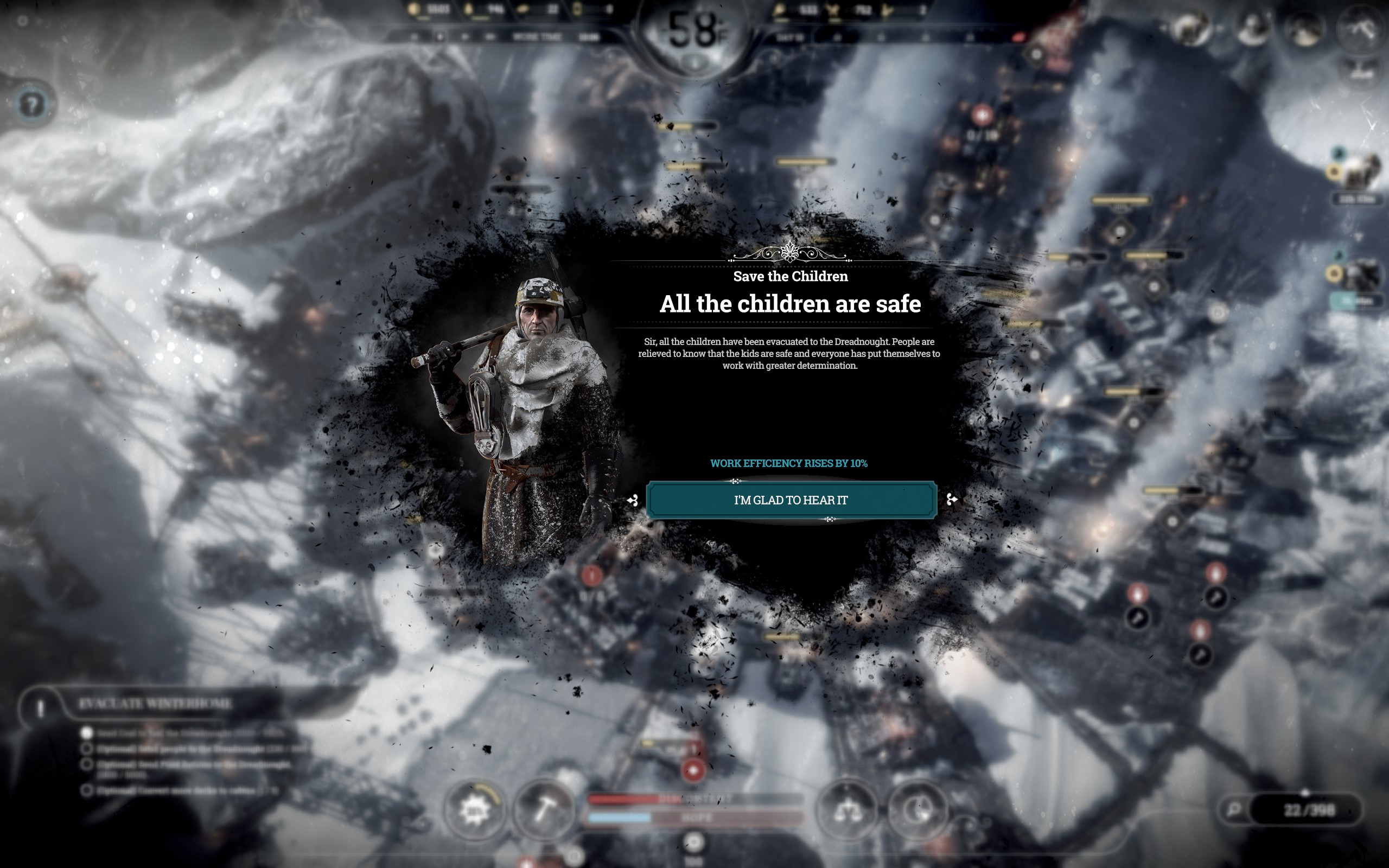
Because I had Winterfell Winterhome primarily automated with minimal adult labor necessary, evacuating the children was my first priority, not necessarily for their safety, to reduce the strain on my resource streams. But an achievement is an achievement, and with the most difficult part of “The Fall of Winterhome” done, it was just a matter of concluding resource hording before finishing up the scenario.

Add Frostpunk to that pile of games that I should have played sooner rather than later. It is an outstanding city building sim. If the game has any flaws, it would be the character designs looking as if they had been marrying their cousins while avoiding sunlight like vampires for three generations. It’s an unfortunate result of historical amnesia; in reality, Victorian England actually hosted 15,000 people of African descent. And they did not look like Frostpunk‘s lead character designer Olaf Pożoga’s renders.
Because of this, I may not be as quick to purchase Frostpunk 2.

 Blerd Beats