
When I first imagined “Blerdvision 2025″ as a sequel to my 2016 article highlighting the depiction of Black characters throughout gaming history, I only wanted to produce an update on Black representation in video games. Then I had an idea: what if I spotlighted not merely Black characters in video games, but modern Black game developers?
Initially, I had only committed to this endeavor for the first seven days of Black History Month 2025. Unexpectedly, my research on these developers unearthed a dozen more Black game developers! Here, after spending hours reading and watching interviews, I present seven of them.
But first, I want to disclose some caveats. I chose to highlight developers who have not only shipped their games, but may have also done so on multiple platforms or secured deals with publishers. As an additional hurdle, these are game devs creating games that I have played or intend to play. The criteria for this list ensures a level of quality. The omitted includes abandonware imprisoned in Early Access for all eternity and shovelware whose inclusion would mar the level of work and accomplishments that their peers have achieved.
Perhaps in 2026, I will be able to expand this list to a full 28 days as others finish up their projects. But for now, in 2025, I am enthused to present seven more Black game devs.
Rise Home Stories Project

My only regret with the first edition of “Blerdvision 2025” is that the people spotlighted are overwhelmingly male. The disparity of not only BIPOC but also women in the gaming industry is why we celebrate those who have made a breakthrough. As I frequently say: “Gamedev is hell.”
Paige Wood’s contributions extend beyond gaming. As supervising producer of several productions, she is a key member of the Rise Home Stories, a project by “a group of multimedia storytellers and housing, land, and racial justice advocates,” who seeks to “reimagine the past, present, and future of our communities.”
Dot’s Home is a video game that definitely addresses the question, “Who is represented in ‘our’?” Developed with an “it takes a village” methodology, one can find industry names like Evan Narcisse, Neil Jones, and Gita Jackson among the contributors. Wood herself was even featured in Essence during the game’s marketing campaign.
I encourage you to watch this interview of Wood and Christina Rosales as they talk about why Rise Home Stories produced Dot’s Home.
Interabang Entertainment

If there will ever be a time when we discuss the Black equivalent of a Will Wright or Sid Meier, it may very well be Justin Woodward. While researching (modern) Black game developers, I stumbled upon a low definition video of Interabang co-founders Chris Sauquillo and Woodward practically moving out of their mom’s basement or garage to whatever their future “studio” would look like. They published their first project, Super ComboMan: Smash Edition, on PS4, Xbox One/Series S|X, and PC.
Lead artist Sauquillo would move on to People Can Play Studios, while Woodward stayed to nurture Interabang into an indie powerhouse. First, a partnership with View Askew Productions would yield Interabang’s second game, Jay and Silent Bob: Mall Brawl; a Castle Crashers-like sequel, Jay and Silent Bob: Chronic Blunt Punch, is currently in development.
Woodward’s contributions to the gaming industry stretch beyond his studio. He is also co-founder of the Media Indie Exchange (“The MIX”), and founder of the non-profit Black Voices in Gaming. I need to pause here and emphasize that “Blerdvision: Black Game Developers 2025 Part 2” would not have been possible without what Woodward has accomplished with the MIX and Black Voices in Gaming. While the MIX provides marketing opportunities for all indie developers, the Guerrilla Collective is an online showcase that, to my knowledge, highlights Black-developed games especially and specifically. At least one-fourth of the developers I have highlighted for Black History Month 2025, I discovered through the Guerrilla Collective.
Woodward is a name in (Black) game dev to keep an eye on. His Black Voices in Gaming is from where I borrowed the cover art for this series.
Adam Kareem
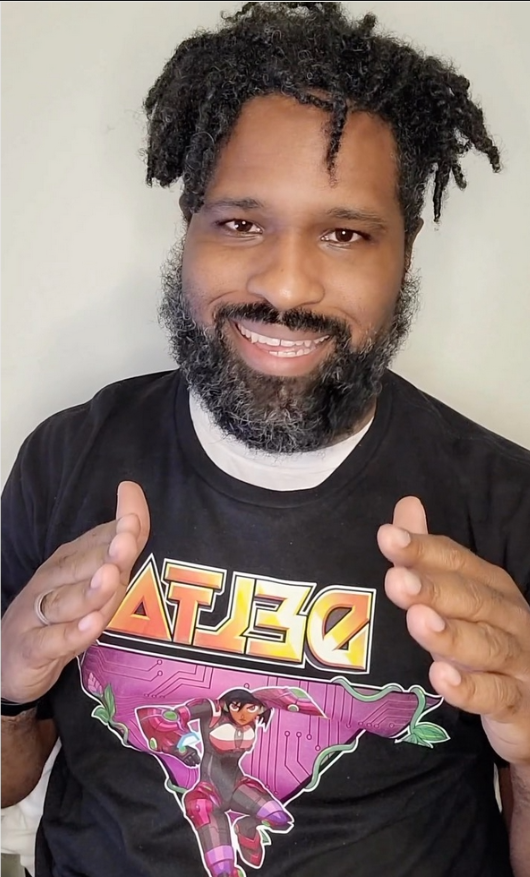
In his MIX/Black Voices in Gaming interview, Adam Kareem states that his journey as a game dev began when a friend at work informed him that he did not need to learn a special computer programming language to create a video game. Mechanical engineer at Whirlpool by day, Kareem began tinkering with game engines like Unity and Unreal, favoring the latter for its Blueprints system. From this, Protodroid DeLTA was born.
Kareem wanted to make a game paid homage to the Mega Man X games of his childhood, but in 3D and with modern features such as lock-on targeting. Protodroid DeLTA also contrasts the gaming industry’s affinity for dark themes with its “Solarpunk” aesthetic. Given that Kareem secured Humble Games as a publisher, should he choose to produce another title, his future might be similarly bright.
3-Fold Games

Creative writer by trade, Chella Ramanan attended a writing retreat where came into contact with game industry names such as John Ingold and Rhianna Pratchet. Inspired by the discovery of a seemingly new writing format, Ramanan worked to adapt her writing style for video games. After meeting programmer Claire Morwood at an XX Games Jam for women, trans, and non-binary people to encourage more diversity in game development. The theme of a woman with dementia originated from Ramanan’s writing ideas notebook, and within that 48-hour Games Jam cycle, Before I Forget was born. Ramanan and Morwood would then turn their friendship into a business partnership, launching 3-Fold Games and developing Before I Forget as a full project.
Ramanan is also co-founder of POC in Play, “an organisation creating a range of initiatives and programme of events designed to increase the visibility and representation of People of Colour in the video games industry.” And you know that’s a direct quote because of the British spellings!
Dreamnauts Studios (formerly Playtra Games)
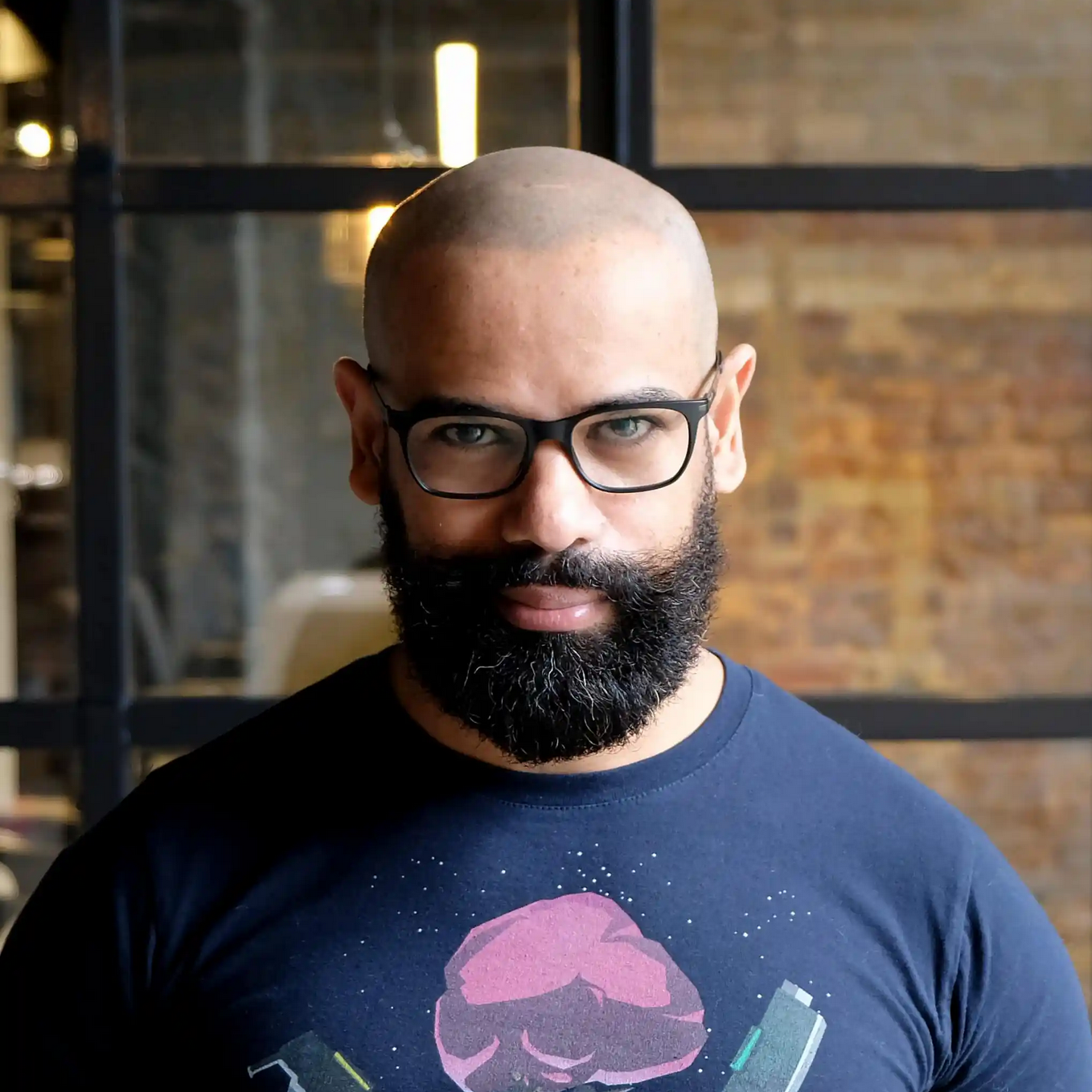
Dan Bernardo grew up in Brazil too poor to own his own video game system, so he would instead watch a neighbor play then go home and draw what he had witnessed. Growing up, he would endure facing hate hatred for being both black and queer. Eventually, he would become successful enough in his personal endeavors to found Playtra Games. Dedicating its mission to that of inclusion and exploring modern concepts of identity, the indie studio’s project, Grid Force — Mask of the Goddess would be an RPG of realization and discovery.
From a gameplay standpoint, Grid Force was inspired by Mega Man Battle Network. Its all-female cast stands out, too; Bernardo claims that this happened accidentally: while musing over their original character designs, his team just kept naturally gravitating towards women. This compelled him to hire more women on his team to bring authentic, lived experiences to the game.
Playtra Games is now known as Deamnauts Studios.
Waking Oni Games

Assistant Professor of Instruction at Northwestern University by day, game developer by night, Derrick Fields began his career in games development by flexing his leadership skills and rallying post-graduate roommates into creating something meaningful. Waking Oni Games is dedicated to not only creating games with a BIPOC team, but also depicting BIPOC characters in their products.
Fields taking a trip Kinosaki Onsen, Japan inspired Onsen Master. Fashioned in the genre of the restaurant manager, the protagonist runs an onsen, and must cater to the medicinal needs of their customers. As a parent, Fields hopes to develop more family-friendly games that would encourage others to engage in couch co-play.
NITETIME Studios
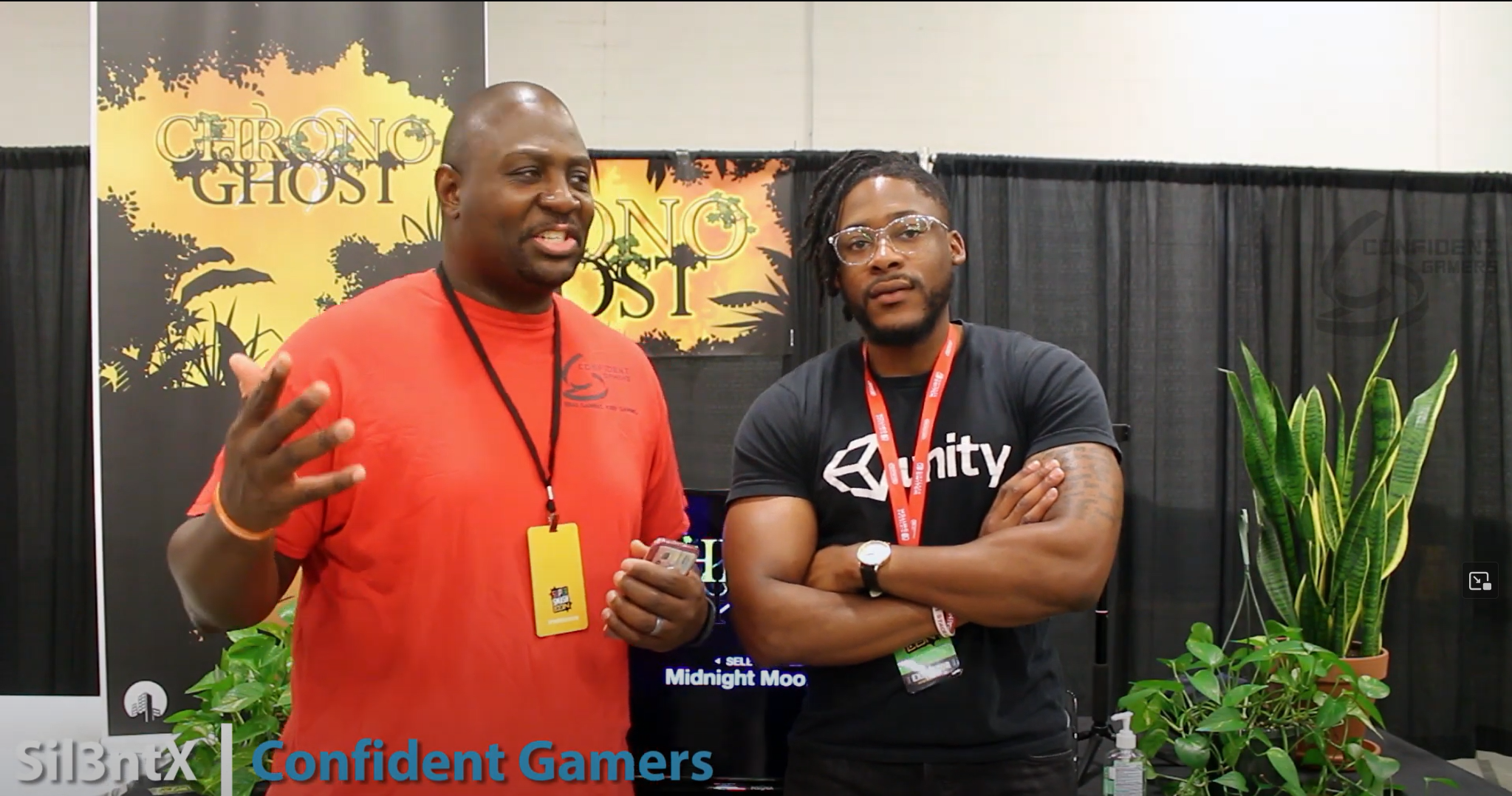
I kept seeing Chrono Ghost listed among games by black game developers, but I experienced great difficulty confirming this. Its official website does not host an “about us” page like most other developers. However, there are two social media options that I could explore, and through one of them, I exhumed name within a deleted post: Kelly T. Davis. Taking this to YouTube led to another discovery: Davis sampled his game at a convention in 2018.
At that time, Davis had been working on Chrono Ghost for three years. His goal was to create a 2D platformer emulating the difficulty of the NES days. At the time of this interview, playtesters ran through 500 lives before beating the first three levels. Davis planned on launching with twenty-five levels. Good luck!
 Blerd Beats
One thought on “Blerdvision: Black Game Devs 2025 Part 2!”