
Grant Morrison and Frank Quitely’s WE3 is a fantastic example of how comic books facilitate limitless possibilities. Though a film has allegedly been in development hell since 2006, and James Gunn has been on record since 2015 that he would like to direct it, I just cannot fathom it coming into fruition. While a comic book concerning the military abducting a dog, cat, and bunny and fitting them with cybernetic enhancements to make them killing machines is fair game, a movie version would make for straight PETA bait—even if the animals were CGI.
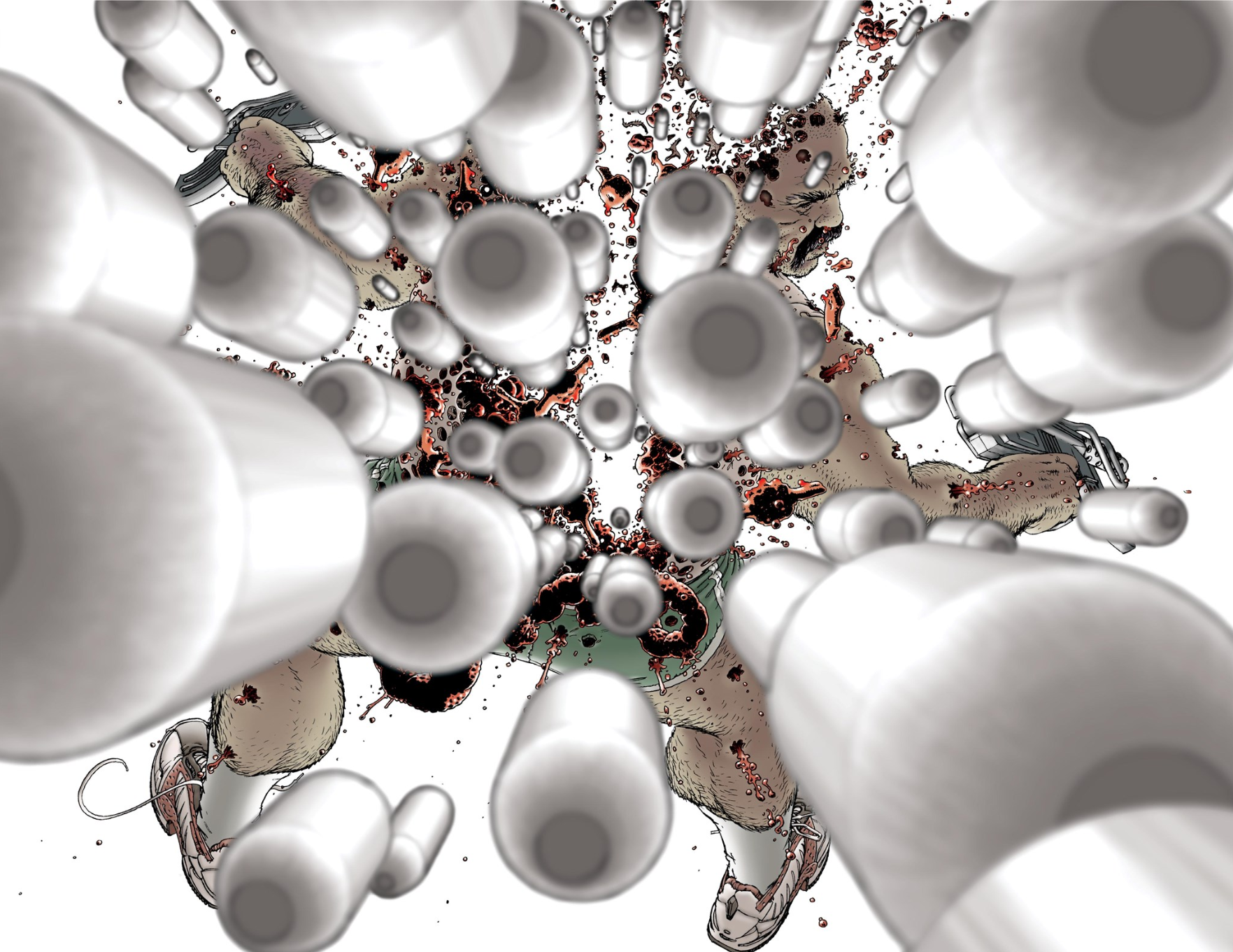
Few subjects garner more sentimentality than pets. Thus, transforming domestic friendlies into ruthless killing machines transcends the grotesque into the macabre. WE3’s opening sequences swiftly establish that this ain’t no Homeward Bound. A crime boss detects that someone or something stealthily dispatched his henchmen. He sprints toward a room and a hail of bullets greets him. I cannot recall a 3D spread that cool in comics.
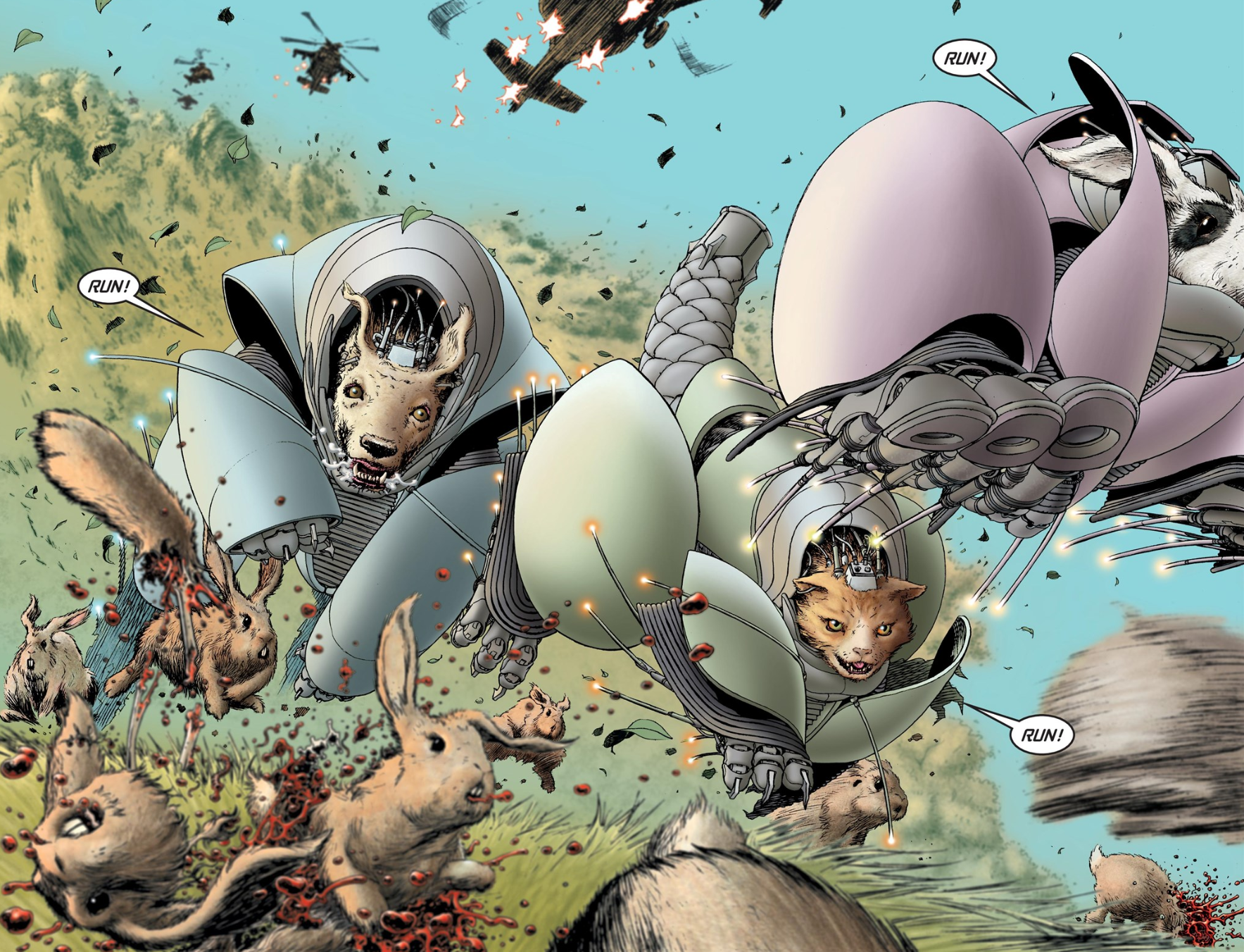
After that Mortal Kombat-style fatality, the WE3 squad comprising a cybernetically enhanced Golden Retriever codenamed “1” (Bandit), a Shorthair codenamed “2” (Tinker), and a rabbit codenamed “3” (Pirate), returns to HQ. With the mission complete, the government suits walk in and inform the woman responsible for maintaining the weapons—because they are weapons—Dr. Roseanne Berry, to decommission, or destroy the animals. Dr. Berry instead skips the lockdown step of WE3’s daily shutdown process. The squad notices the notices the lapse, and books it for the facility’s exit, violently rushing past Dr. Berry who is relieved that the weapons do not kill her during her escape.
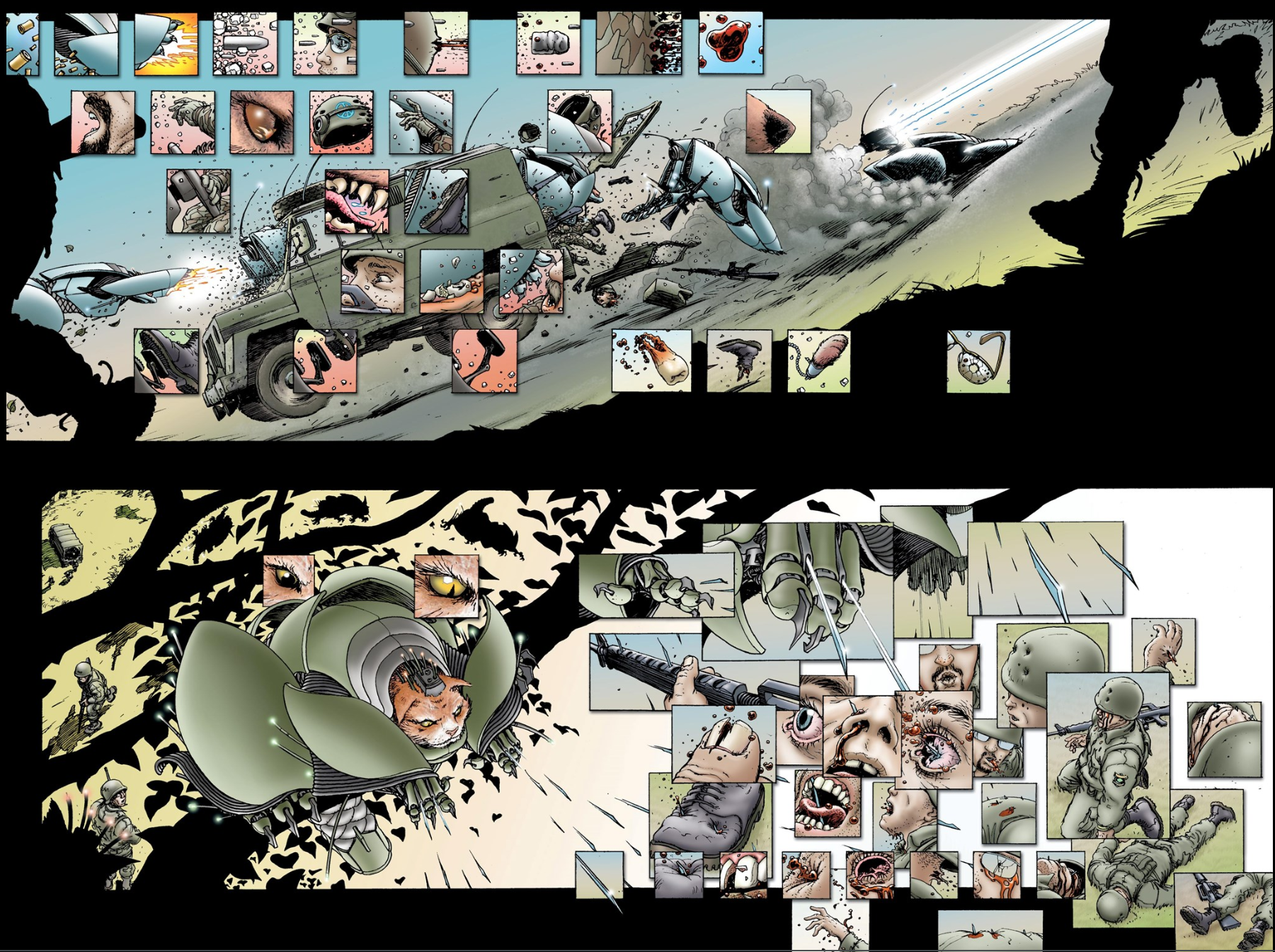
But remember: they are not just weapons, but once-domesticated animals. And so the endearing adventure begins: three pets abducted from their families and subjected to scientific experiments now look for home. What I appreciate most about Morrison’s writing is his depiction of the animals’ individual personalities. Bandit’s dedication to team cohesion certainly appeals to the pack mentality of a canine. His obsession with being a “gud boy” dictates his every decision, from saving noncombatants from being shredded into paste, to defacing a child’s father. Tinker castigates people. Humans “st!nk,” and she would rather have nothing to do with them. Only her penchant for feral savagery in combat overshadows her irascibility. Lastly, Pirate’s uncompromising curiosity propels WE3 forward, both in terms of the team itself and the book’s plot. Among the three, Pirate is not as sharp as Bandit or Tinker as demonstrated by his inability to discern when he is in danger. Their combined personalities and interactions captivate.
Morrison dispatches a platoon to terminate WE3 and Quitely has a field day, responding by unleashing a vivid display of each of their cybernetic capabilities. He showcases for readers his comprehensive knowledge of both human and animal viscera. I have read my fair share of Alien vs Predator comics and played nonsensically gory video games such as Soldier of Fortune, but the detail and quality of Quitely’s panels excite as much as they shock.
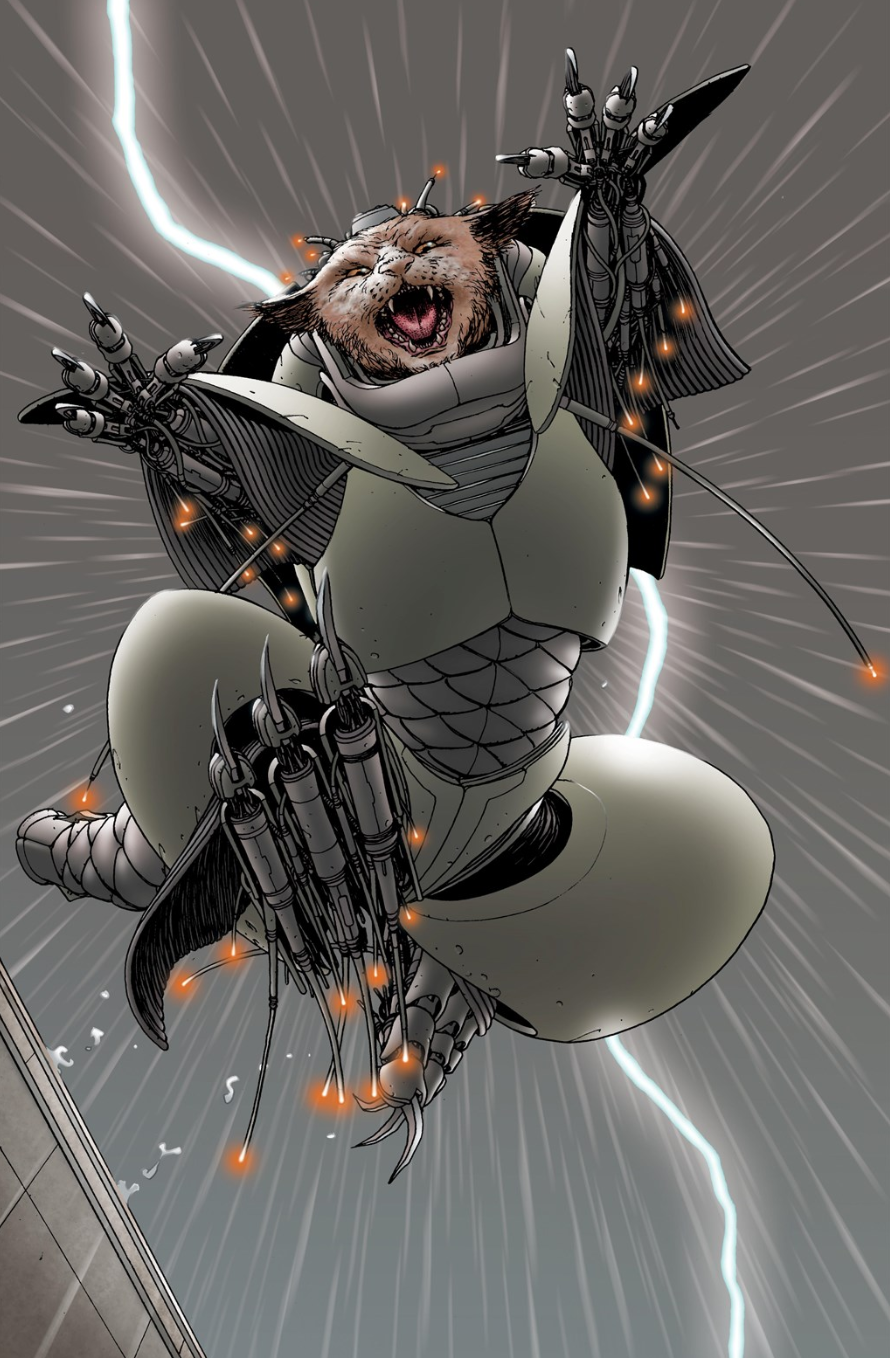
Military personnel concern themselves with damage control, costing their soldiers and their other experiments their lives. The more they interfere with the squad, the more collateral damage accumulates. The message concerning what could possibly go wrong when pushing the limits of animal experimentation is one thing; the reminder that we keep pets because of their charm as furry friends is another.
 Blerd Beats