
The trailer for The Little Mermaid (2023) took me by surprise for the same reason that surprised everyone else. Halle Bailey as Ariel? Word? I determined that my family would support this gesture with our dollars and opening weekend attendance because I knew that some self-proclaimed movie enthusiasts would take umbrage with Ariel’s reimagining. I will continue to roll my eyes at the accusations of racebending.
After all, if there was ever a strong to be made for racebending beyond Hollywood’s history of discriminating against minorities discriminated against, it would be The Little Mermaid. Disney adroitly maneuvers toward a 100% more diverse cast (because now, Sebastian’s accent actually makes sense) through Ariel’s sisters. King Triton’s daughters now represent the seven seas: Karina (Arctic Ocean), Indara (Indian Ocean), Tamika (Southern Ocean), Mala (North Pacific Ocean) Perla (South Pacific Ocean), Caspia (North Atlantic Ocean), and Ariel (South Atlantic). The House of Mouse leans harder into the inspiration for “Under the Sea,” reggae and calypso music, for The Little Mermaid‘s setting grounded in the Caribbean. Especially with Caspia representing one of Ariel’s sisters, Disney effectively curb-stomps fan theories that their adaptation of Hans Christian Andersen’s novel is set anywhere else.

In actuality, “black Ariel” is at the bottom The Little Mermaid‘s problems. At the top of the list is setting a film in the Caribbean at any time prior to the 19th century, with zero acknowledgment of the Trans-Atlantic Slave trade. Yes, I know it is a Disney movie, but so is Black Panther: Wakanda Forever, where Namor’s origin story recognizes the atrocities of imperialism, colonialism, and of course, slavery. Here, I emphasize the differences possible in filmmaking when the director and screenwriters for a movie like The Little Mermaid are white— Rob Marshall, David Magee, and Jane Goldman, respectively—and when the shot-callers in a movie like Wakanda Forever are black—Ryan Coogler and Joe Robert Cole. Marcus Ryder’s blog at BlackonWhiteTV suggests post-revolutionary Haiti as a potentially child-appropriate setting for The Little Mermaid while dodging most of the nastiest bits of the Triangular Trade.
Because of this glaring historical erasure, I struggle mightily with Queen Selina. She is supposed to be the queen of a “Caribbean island kingdom.” Wut? And the customary Disney prince, Eric, is Selina’s adopted child. Yo, I know we are talking about a live-action adaptation of an animated adaptation of a fairy tale, but if suspension of disbelief were to be measured on a scale, any entry in the entirety of the MCU would be more…conceivable…than a Black. Woman. Queen. in the Caribbean. I mean, I appreciate Disney going hard in the paint with representation, but I would have preferred more interaction with Ariel’s sisters for that rather than exceedingly mendacious depictions of diversity. Shoot, even Disney’s very own Pirates of the Caribbean must resort to limiting its only prominent black character to a mistress of voodoo (sigh, more tokenism and stereotypes like Sabastian).
And then
AND THEN!
This black queen of a Caribbean island kingdom adopts a white child!

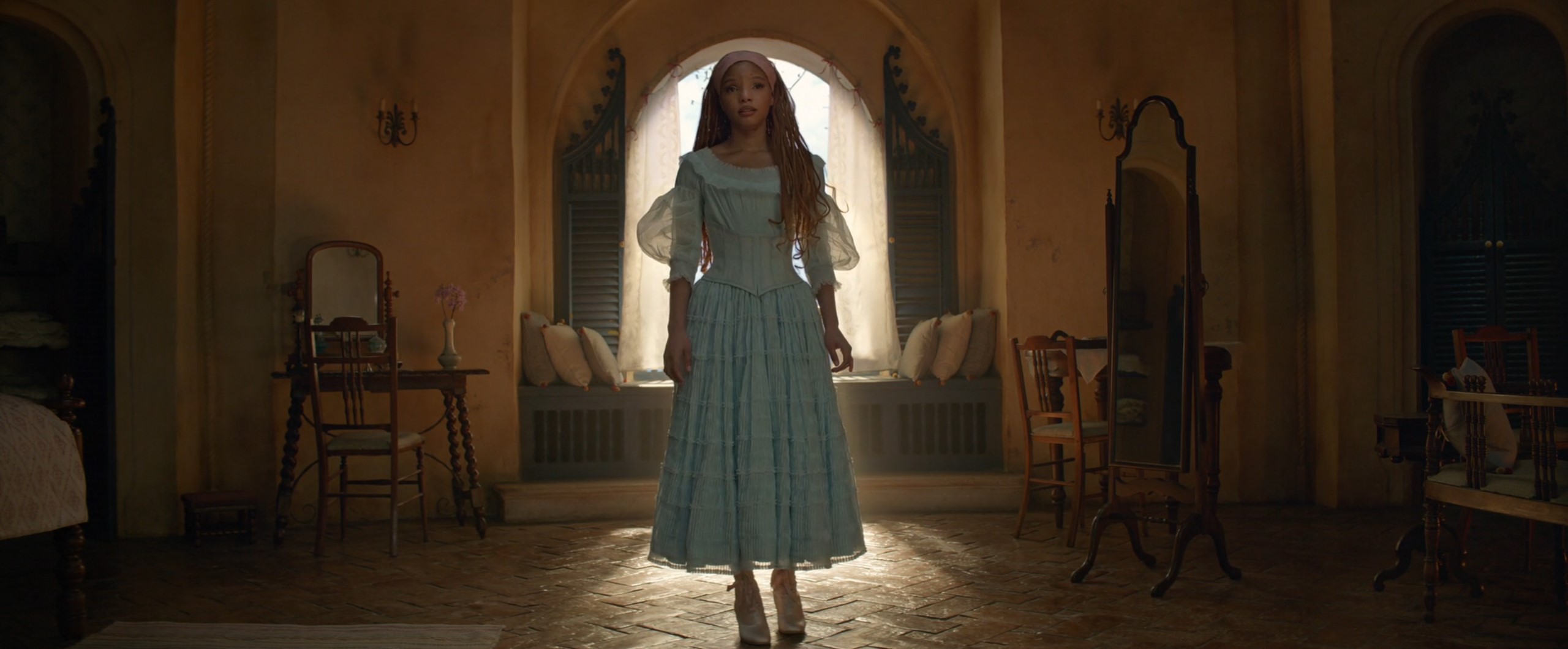
Bruh, I cannot even begin to fathom writing about that absurdity. So I will just transition into the elements of the film that I like. I must stress that I enjoyed The Little Mermaid, and only began deliberating on the above considerations after wondering contemplating its stakes as a Caribbean or West Indian film. That aside, Halle Bailey is casting perfection. I was not necessarily won over by her as mermaid Ariel; her acting prowess effloresces after she turns human. She marvelously clears the challenge of maintaining Ariel’s voiceless energy and sense of wonder through an assortment of facial expressions and gestures. I am impressed that a lack of animated tricks is no handicap here.
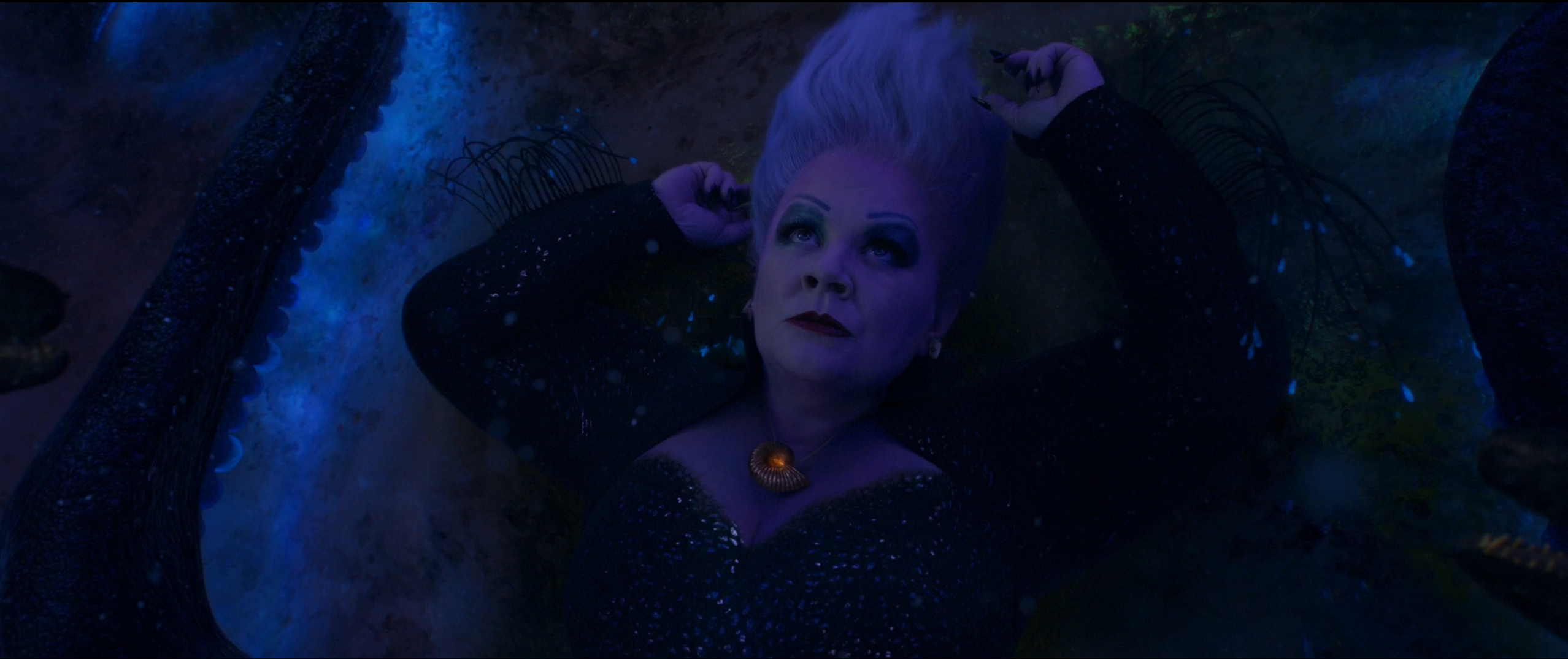
Ursula is one of if not my absolute favorite villains in the pantheon of Disney animated film, and Melissa McCarthy is practically a 1:1 interpretation. Well, almost. If the Queen’s witch disguise in Snow White is supposed to be ugly (and it is), then animated Ursula’s girth serves to garner similar sentiment. However, McCarthy is not morbidly obese, but merely plus-sized. Ursula has sass in the original animation, but here, she is sultry? I actually did not know that Ursla’s character might have been inspired by a drag queen, but the shift in sex appeal makes sense now that she is styled as an actual woman instead of a considerably oversized octo-person.
I am glad to see Daveed Diggs getting paid as Sebastian. I hardly noticed Jacob Tremblay’s Flounder in the movie even though he is Ariel’s best friend. Jonah Hauer-King’s Prince Eric is one-dimensional, but that is the writer’s fault for him existing for no other reason besides as a trophy for Ariel. Finally, Nora Lum contributes a perfect balance between voice acting an annoying bird, Scuttle, and being an annoying person, Awkwafina.

I am hoping that Disney maintains this momentum of a good live-action adaptation for their next attempt: Moana. That movie is a 10/10, so the filmmakers have their work cut out for them, especially because while I appreciate The Little Mermaid utilizing robust colors, obvious green screen scenes are obvious.
 Blerd Beats